Archive | Hash’s Faves RSS feed for this section

Hash’s Faves (“California Sun”)

26 Sep


the_rivieras-california_sunThis week’s pick is total guilty-pleasure, end-of-summer stuff; I’ve always stressed that this ain’t music criticism but stuff that I love, for whatever inane reasons. It’s the 1964 teen classic ”California Sun” by The Rivieras.

The Rivieras were a band from South Bend, Indiana; totally ironic that their big hit was one of the defining songs of the frat rock/surf/hot rod movement. The band members at the time (as far as I can tell) were Marty “Bo” Fortson, vocals and rhythm guitar, Joe Pennell, lead guitar (remember when you had a “rhythm” guitarist and a “lead” guitarist?), Otto Nuss, organ and piano, Doug Gean, bass, and Paul Denner, drums. The song was written by Henry Glover, a prolific African-American songwriter whose other big hit was ”The Peppermint Twist.” It’s probable that none of the original band members had ever seen a wave or surfed in their lives, but Hot Rods and Hot Rod culture were a thing in Indiana, so I guess they have a certain amount of street cred. And they probably contributed greatly to the sales of Farfisa organs.

In 1964, even though I was still 7 years away from being able to drive, I was a total Hot Rod nut. I built model cars (anyone out there remember Bud “Kat” Anderson?), drew ”Rat Fink” sweatshirts for the local juvenile delinquents, went to the occasional drag race at U.S. 30, and read all of the car magazines. I believe among the first 45’s I ever bought were the Beach Boys’ “Get Around,” Jan & Dean’s “Little Old Lady From Pasadena,” and this.

You can listen to it here:

This post is reprinted from News From The Trenches, a weekly newsletter of commentary from the viewpoint of a working musician published by Chicago bassist Steve Hashimoto. If you’d like to start receiving it, just let him know by emailing him at steven.hashimoto@sbcglobal.net.
Hash’s Faves: “Kid Charlemagne”

7 Sep

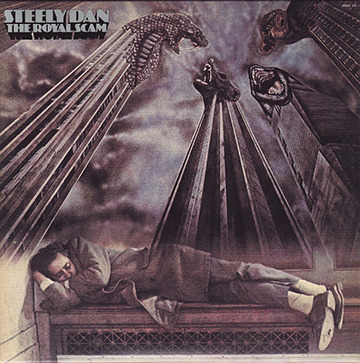
The_Royal_ScamThis week’s pick is by the band Steely Dan, “Kid Charlemagne,” from their 1976 album ”The Royal Scam.” It was written by Walter Becker and Donald Fagen and features Becker on guitar, Fagen on lead vocals, and the L.A. A-list session crew of Larry Carlton on guitar, Don Grolnick and Paul Griffin on keyboards, Chuck Rainey on bass, Bernard “Pretty” Purdie on drums, and Michael McDonald, Clydie King, Sherlie Matthews and Vanetta Fields on backing vocals.

This song pretty much has everything I look for and love about the best Dan tunes – interesting chord changes, an opaque story line delivered in Fagen’s world-weary voice, obscure cultural references, and of course stellar playing, arranging, production and recording. One story online has it that Fagen originally wanted Lee Ritenour for the session but he wasn’t available; when Carlton was hired Fagen asked him to play the solo in Ritenour’s style (you can take this with a grain of salt).

Both Fagen and Becker have said that the broad inspiration for the song was legendary LSD chemist Owsley Stanley, although Owsley has scoffed at the idea. I find it credible, although the lyrics can also be fit to a storyline about anything from rock cocaine to meth. The “Technicolor motorhome” certainly refers to Ken Kesey and The Merry Pranksters’ day-glo bus Furthur, and an online commenter has also said that the “Is there gas in the car” line refers to an incident where Stanley got busted because he ran out gas. Whatever the case, I’ve always loved the mystery in this quintessential L.A.-in-the-70’s lyric.

As a sidebar, no one who is on speaking terms with me can corroborate this (meaning my girlfriend from the time), but back in the early 90’s I had the brilliant idea to start a Steely Dan tribute band. We were playing a lot of Dan tunes on the legendary Famous Pizza Gig (Monday nights at Bacino’s on East Wacker Drive), and we had some good charts. My idea was to use guitarist Steve Hutchins on vocals (and guitar of course), Neal Alger or John Lewis on guitar, Carter Luke on keys, Heath Chappell on drums and Mike Levin on saxes. I never quite got around to organizing it, of course, and now the landscape is dotted with Dan bands. Just sayin’…

You can listen to it here: https://www.youtube.com/watch?v=uGr6knsm8t0

This post is reprinted from News From The Trenches, a weekly newsletter of commentary from the viewpoint of a working musician published by Chicago bassist Steve Hashimoto. If you’d like to start receiving it, just let him know by emailing him at steven.hashimoto@sbcglobal.net.
Hash’s Faves: “Sandu”

31 Aug

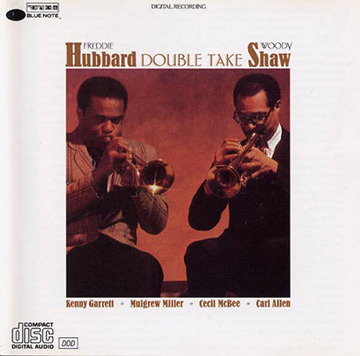
Double_TakeThis week’s pick is one of my favorite jazz blues tunes, ”Sandu,” written by the majestic trumpeter Clifford Brown, and in this case recorded by the awe-inspiring duo of Woody Shaw and Freddie Hubbard. It’s from their 1985 duo album ”Double Take,”and features Shaw and Hubbard on trumpets, Kenny Garrett on alto sax, Mulgrew Miller on piano, Cecil McBee on bass and Carl Allen on drums.

Shaw takes the first solo, and after the 16th-note line he rips in his third chorus I can just picture him taking the horn off of his face and grinning at Freddie, like “How ‘bout that?” Freddie, of course, rises to the challenge, but I think I still dig Woody’s solo better.

It’s interesting to note that Miller was only 30 years old at the time of this recording, Garrett was only 25 and Allen was 26. McBee was the senior sideman, at 50. He’s one of my favorite bassists, and as we were watching a DVD of Blue Note records’ anniversary concerts in New York, McBee was featured with, I think, Roy Hutcherson, and Nancy said “He reminds me of you.” Quite a compliment, which I take with a grain of salt, but he’s definitely one of the cats I model my playing on. Longtime readers may recall that although I’m strictly an electric bass guitarist, unlike most bassists my age my first gigs on the instrument were bebop gigs, rather than the path usually taken by pork-chop players (whose first gisg were usually rock or blues or r and b gigs). The bassists I listened to as I was learning how to play were Cecil, Ray Brown, Ron Carter, Paul Chambers, Percy Heath, Mingus, Keter Betts, Jim Hughart, Stanley Clarke, Nils Henning Orsted-Pederson and Dave Holland (would that I had absorbed more than I did!).

Sad to think that within 4 years Shaw would die. Freddie died in 2008, after a celebrated career that spanned post-bop, free jazz and fusion, and I’m glad that I had a chance to at least meet him, if not play with him. I first became aware of Shaw when he released his ”Rosewood” album in 1978, when I was still a new jazz listener. I loved his playing, being an ex-trumpeter, but his harmonic sophistication was probably beyond me at the time (probably still is). Tragically, he was only 45 when he died, and hadn’t achieved the fame he deserved, although he was considered a trumpet player’s trumpet player.

You can listen to it here: https://www.youtube.com/watch?v=hm4_4tPbXxA

This post is reprinted from News From The Trenches, a weekly newsletter of commentary from the viewpoint of a working musician published by Chicago bassist Steve Hashimoto. If you’d like to start receiving it, just let him know by emailing him at steven.hashimoto@sbcglobal.net.
Hash’s Faves: “Mexico”

27 Aug

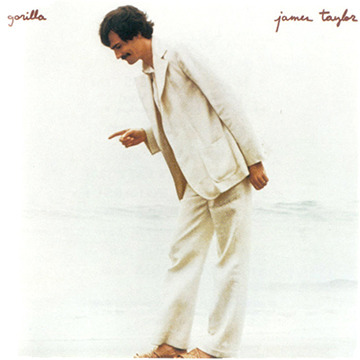
GorillaThis week’s pick is an old tune by singer/songwriter James Taylor, “Mexico.” It’s from his 1975 album Gorilla and features Taylor on guitar and vocals, Milt Holland on percussion (I assume he plays the marimba part, although multi-instrumentalist Victor Feldman, who appears elsewhere, seems the more likely culprit), Gayle Levant on harp, David Crosby and Graham Nash on harmony vocals and the famed L.A. rhythm section team known as The Sectio, Danny “Kootch” Kortchmar on guitar, Leland Sklar on bass and Russ Kunkel on drums and shaker.

Taylor is an extremely thoughtful musician, not only as a lyricist but as a bandleader as well. His guitar-playing style is not the simple strumming-chords school of rhythm guitar, a la Bob Dylan (I know, I know, Dylan does occasionally use an Elizabeth Cotten style of finger-picking, but mostly he strums), but rather a carefully thought-out part of the arrangement of each song, as a whole, often interacting closely with the bass parts that Leland Sklar played. Sklar, for his part, is an extremely melodic player; his parts very rarely stick to simple roots and fifths, and he is one of my favorite players. (Jimmy Johnson, from the fusion band Flim and The BBS, took the bass chair over from Sklar, who held it for many years).

Taylor still suffers from the perception that all of his songs are serious and that he’s a humorless New Englander, but I think that nothing could be farther from the truth. Although I’ve never seen him live myself, I’ve watched many of his concert videos, and he seems to be a warm kind of guy with a dry sense of humor. This tune is very light-hearted and the arrangement is buoyant. Having Nash on harmonies helps add to the joyous atmosphere, I’d say.

Kootch had been with Taylor from the beginning of his career. After spending some time in England he relocated to California, where he became a session player for Carole King, touring with her as well. His work on King’s Tapestry album and his work with Taylor led to his becoming one of the first-call players in L.A., and he formed The Section with Sklar, Kunkel and keyboard player Craig Doerge. Their sound kind of defined L.A. pop music in the late 70’s and 80’s.

You can listen to it here: https://www.youtube.com/watch?v=PgkKjHN349I

This post is reprinted from News From The Trenches, a weekly newsletter of commentary from the viewpoint of a working musician published by Chicago bassist Steve Hashimoto. If you’d like to start receiving it, just let him know by emailing him at steven.hashimoto@sbcglobal.net.
Hash’s Faves: “I Feel Fine”

20 Aug


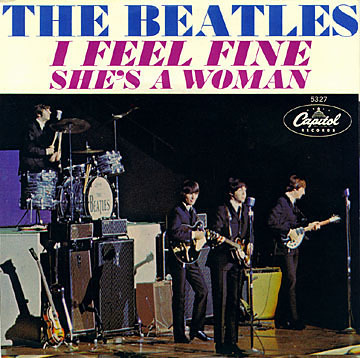
TI_Feel_Finehis week’s pick is a perfect little gem of a pop song by The Beatles: “I Feel Fine,” written by Lennon and McCartney. This was the A-side of their 1964 single, backed with ”She’s A Woman” (it was later included on their album ”Beatles ’65”; in those days albums were often just a collection of singles and filler). It’s just the Boys — John Lennon on guitar and vocals; Paul McCartney on bass and vocals; George Harrison on guitar and vocals; and Ringo Starr on drums.

This record is evidently the first recording to purposely feature feedback; the story is that John had leaned his semi-acoustic guitar up against an amp in the studio which, naturally, resulted in howling feedback. The Boys were just starting to feel their oats as studio auteurs and immediately asked producer George Martin if that sound could be incorporated into the song. Ringo has also said that his drum rhythm was based on the Latin-ish groove of Ray Charles’ “What’d I Say.” Although harmonically it’s a pretty simple tune, they do some deceptive things. And I love the vocal parts (I tend to like the songs where John sings lead simply because he’s so human; singing along in the car with Paul can be daunting).

You can listen to it here: https://www.youtube.com/watch?v=TE5hoaij79U

This post is reprinted from News From The Trenches, a weekly newsletter of commentary from the viewpoint of a working musician published by Chicago bassist Steve Hashimoto. If you’d like to start receiving it, just let him know by emailing him at steven.hashimoto@sbcglobal.net.
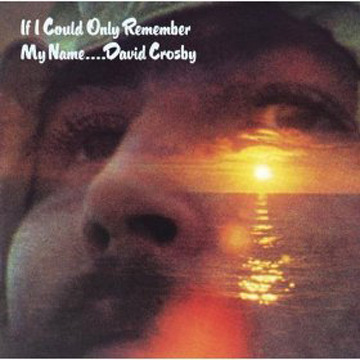
Hash’s Faves (“Orleans” by David Crosby)

28 Jul

If_I_Could_Only_RememberThis week’s fave is “Orleans”, a traditional French song rendered by David Crosby on his 1971 album ”If I Could Only Remember My Name.” Although a veritable who’s who of Bay Area musicians (Jerry Garcia, Phil Lesh, Mickey Hart, Bill Kreutzman, Jack Casady, Paul Kantner, Grace Slick, Jorma Kaukonen, Joni Mitchell, Graham Nash, Neil Young, Gregg Rolie, Michael Shrieve and David Freiberg) appear on the record, I believe this track is all Crosby, overdubbing multiple (gorgeous) vocals.

I’ve wanted to know what this song is about for years, but thanks to the internet, I think it’s merely a listing of church or parish or maybe neighborhood names in Paris.

I always loved this record, from the day it came out. Critics were not kind at the time, but revisionist rock history now places it high amongst influential albums from the time. One thing that really interested me about the record was the way that the Bay Area musicians formed ad-hoc groups like this and performed on each other’s records, in much the same way that jazz musicians do. Many of the players on Crosby’s album also appear on the record ”Blows Against The Empire,” credited to Jefferson Starship but really a Paul Kantner solo project. There was always a great deal of movement between Crosby Stills Nash and Young, Jefferson Airplane, The Dead, Quicksilver Messenger Service and Santana, as well as singers like Joni Mitchell and Mama Cass Elliott.

I’ve read that some of this record reflects the pain the Crosby was suffering due to his girlfriend Christine Hinton’s tragic death in an auto accident; the song ”Traction In The Rain” is surely about that. Much of the record (and there’s an alternate version on YouTube that I just discovered) is filled with noodling and meandering jams, but the songs are strong, because Crosby always had a gift for melody. And for good or for ill, he always wrote lyrics with his heart on his sleeve; a lot of his lyrics may be, as Neil Young once said, hippie dreams, but he believed fully in them (even though he was a gun-totin’ coke head).

You can listen to it here: https://www.youtube.com/watch?v=Mk8PSTtOsKk

This post is reprinted from News From The Trenches, a weekly newsletter of commentary from the viewpoint of a working musician published by Chicago bassist Steve Hashimoto. If you’d like to start receiving it, just let him know by emailing him at steven.hashimoto@sbcglobal.net.
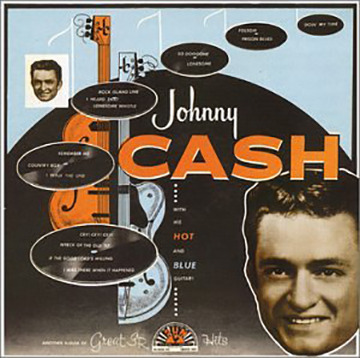
Hash’s Faves (Johnny Cash’s “Folsom Prison”}

19 Jul

Hash’s Faves

Johnny_Cash-2This week’s fave is some old-school country music, from back before country music became rock with cowboy hats. It’s the Johnny Cash classic ”Folsom Prison Blues.”This is the original version, from Cash’s 1957 debut album ”Johnny Cash With His Hot And Blue Guitar”; a “live” version, actually recorded at Folsom,
is also accepted as an iconic and official version. The backstory there is that the cheers of the prisoners reacting to the line “But I shot a man in Reno just to watch him die” was added in post-production; the prisoners were careful not to cheer any lines referring to lawlessness lest they invite retaliation from the guards, who were probably a little nervous about the show anyway.

I assume that the players on the session are Cash’s long-standing band (they also played on the live version), guitarist Luther Perkins, bassist Marshall Grant and drummer W.S. Holland. The record was the first LP issued by Sun Records; the legendary Sam Phillips produced, and I assume it was recorded at the Sun Studios in Memphis, Tennessee.

Cash wrote the song while stationed with the U.S. Air Force in West Germany, in the 1950’s. He had seen a movie ”Inside The Walls Of Folsom Prison” (a dramatic film, not a documentary; he came up with “I shot a man in Reno” line and “borrowed” a melody and some of the lyrics from a song by Gordon Jenkins, “Crescent City Blues,” which in turn was based on a song by blues singer/pianist Little Brother Montgomery. The Jenkins song was on a “concept album” called ”Seven Dreams,” which was released in 1953. Jenkins is the author of one of the most beautiful jazz ballads, ”Goodbye,” which was Benny Goodman’s sign-off tune for his radio show, and also arranged Frank Sinatra’s “September Of My Years” album. The singer on Jenkins’ “Crescent City Blues” was Beverly Mahr. Jenkins sued Cash in the 70’s and was paid a settlement of $75,000; it’s unclear if Montgomery was ever paid any money (Montgomery spent a lot of time here in Chicago and I wonder if any of you mugs out there knows anything about this?).

The song became one of Cash’s signature tunes, and helped forge his image as an outlaw, although, unlike Merle Haggard, he was never in prison. He did spend a lot of his early years living a wild life on the margins of the law, along with room-mate Waylon Jennings. He was a notorious drug user, but finally cleaned himself up in the 1990’s.

Cash was an activist; he continued to do prison concerts throughout his career, and was an early fighter for Native American rights – he recorded the song ”The Ballad Of Ira Hayes” in 1964. Hayes was one of the U.S. Marines who raised the American flag on Mt. Suribachi on Iwo Jima; he was a member of the Pima tribe, and on his return to the United States he descended into alcoholism and died of exposure in 1955. The Clint Eastwood film ”Flags Of Our Fathers” is a moving account of his story. Cash also shook up country music circles when he recorded ”Girl From The North Country” with Bob Dylan in 1969 (it became the leadoff track on Dylan’s album ”Nashville Skyline,” which also shook up the rock world), and his invitation to Dylan to appear on his television show arguably opened the gates to all subsequent country/rock/folk collaborations.

Cash died in 2003, after experiencing a career rejuvenation at the hands of producer Rick Rubin.

You can listen to it here:
http://www.tekstowo.pl/piosenka,johnny_cash,folsom_prison_blues.html

This post is reprinted from News From The Trenches, a weekly newsletter of commentary from the viewpoint of a working musician published by Chicago bassist Steve Hashimoto. If you’d like to start receiving it, just let him know by emailing him at steven.hashimoto@sbcglobal.net.