Archive | Music RSS feed for this section

Hash’s Faves: “I’m Gonna Be (500 Miles)

17 Feb

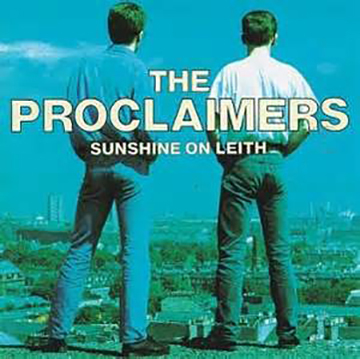
ProclaimersThis week’s pick has a little bit of a backstory – it’s the song “I’m Gonna Be (500 Miles)” by the band The Proclaimers. It’s from their 1988 album “Sunshine On Leith.” The Proclaimers are the brothers Charlie and Craig Reid (Charlie on guitar and vocals and Craig on vocals); the band on that album included Jerry Donahue, acoustic and electric guitars; Gerry Hogan, steel guitar; Steve Shaw, fiddle; Stuart Nisbet, pennywhistle and mandolin; Dave Whetstone, melodeon; Pete Wingfield, keyboards; Phil Cranham, bass; and Dave Mattacks and Paul Robinson:, drums and percussion.
So – I’ve always liked this song. I first heard it when it was popular; I was briefly in an 80’s rock band (a band that only rehearsed; we never gigged because we couldn’t find a singer to commit), playing songs by The Motels, Prince, Big Country, The Police, etc. I don’t think we played this one, but I was listening to pop radio a lot then, trying to absorb the vibe. What brought this tune back to mind for me was that I had to write a chart for a cover version of the song for an upcoming wedding; the cover is by a band called Sleeping At Last, some local guys from Wheaton, IL. Their version is very pretty, and at first I thought, “Well, this is an interesting take on the song.” But the more I thought about the more I disagreed with their take on it (I bet some of you may even know these guys; I hope you or they won’t be offended). The Reid brothers’ lyrics are romantic and sentimental, but what, in my opinion, makes this a great pop tune is that the performance does its best to subvert the sentimentality. Going the emo route is almost too easy. I’d even venture to say that the Reids, as Scotsmen, can get away with singing something this sentimental, but someone from Wheaton – well, maybe not.

Great cover versions very often find different interpretations, but I think a truly great cover also avoids the easy solution. Billy Stewart’s outrageous version of “Summertime”; Jimi Hendrix’s “All Along The Watchtower” or “Hey, Joe”; The Animals’ “Please Don’t Let Me Be Misunderstood” (it was originally recorded by Nina Simone); Joe Cocker’s “With A Little Help From My Friends”; Jefferson Airplane’s “The Other Side Of This Life;” even Miles Davis’ versions of Michael Jackson’s “Human Nature” and Cyndi Lauper’s “Time After Time.” I’m also a fan of respectful covers (Brooks and Dunn’s version of B.W. Stevenson’s “My Maria” immediately comes to mind), and don’t get me wrong, I respect what the guys from Wheaton tried to do; they had a concept and they went for it, and I hope they sell a million CDs and get the hell out of the Bible Belt. But The Proclaimers had the right idea to begin with.

My bands do a lot of cover versions; I’ve been lucky enough to inherit arrangements from the guitarists Steve Hutchins and John Rood Lewis, both of whom I think are inventive reinterpreters of pop tunes. I’ve tried my hand as well, and I think I’ve some up with some good efforts. Covering tunes is truly an art, but sometimes you just can’t improve on the original version.

You can listen to it here (warning: the video is comprised of clips from the Johnny Depp movie Benny and Joon, which utilized the song on the soundtrack):

Hash’s Faves: “The Ballad of You & Me & Pooneil”

31 Jan

After_Bathing_At_Baxters.net_Last week I said that I was tired of writing about dead people, and Lord, I still am, but this one’s kind of personal.

With all due respect to Glenn Frey and Mic Gillette, both of whom were fine musicians whose work I greatly loved, when I heard about the death of Paul Kantner Thursday night I felt something more than the tug of nostalgia. Kantner was the leader of the 60’s San Francisco band Jefferson Airplane, a band that provided the soundtrack to some of the formative years of my life (singer Marty Balin started the band, but Kantner evolved, or some say bullied his way, into the leadership role). The band went through many changes, including several name changes, but for me the classic lineup included Kantner on guitar and vocals, Balin on vocals, Grace Slick on vocals and occasional keyboard, guitarist Jorma Kaukonen, bassist Jack Casady and drummer Spencer Dryden. Kantner was probably the weakest member of the group; Balin and Slick were strong singers with remarkable instruments, Kaukonen was (and is) a good guitarist with strong roots in country blues, Casady remains my favorite bass player of all time, and Dryden brought a certain jazz sensibility to the band. Kantner was not a great guitar player, and his voice had a quality that, as they say, took some getting used to. Many of the songs that he wrote for the band were not the band’s best, and many of them have not aged well.

But that’s precisely why he was so important to the band, I think. He was the political conscience of the band, and he wrote about things he felt strongly about, whether anyone liked it or not. My favorite songs from their recordings tend not to be Paul’s tunes – they actually ranged pretty far for a band of that era, when bands took it as a point of pride to write their own material. They covered songs by David Crosby, the enigmatic Fred Neill, Judy Henske (actually, a song that she sang a lot, ”High Flying Bird,” by Billy Edd Wheeler) and traditional folk and blues tunes. Kantner was generous about sharing writing duties on their records with all of the other band members – none of that “Okay, George and Ringo get one tune each!” business. To my knowledge he never took a guitar solo, and he only occasionally sang lead. He had a unique ear for harmony as a singer; the chief difference between the Airplane’s harmony singing and everyone else’s (Crosby, Stills and Nash, The Beach Boys, The Band, The Eagles) was that they based much of their part-singing on quartal rather than diatonic harmony (a trait they shared with the Engish band Pentangle). Kantner seemed to gravitate towards harmony lines that created a feeling of suspension and ambiguity.

They were simultaneously a product of the time (the hippie 60’s) and creators of the zeitgeist. Whether this was a conscious effort on Kantner’s part or just the way that things happened, the band behaved much like a jazz band, in that musicians were always sitting in and guesting on their records and gigs; the Airplane famously lived in a communal house at 2400 Fulton in the Haight-Ashbury neighborhood of San Francisco, and I think he also saw the band as a communal family. Kantner himself often alluded to his Teutonic tendency towards control, but I’d have to say that during those early years he didn’t seem like a guy who felt like he had to protect his turf.

He co-wrote the version of ”Wooden Ships,” with David Crosby and Stephen Stills, that appears on the JA album ”Volunteers,” and I think it’s superior to the version on CSN’s debut album. Of course CSN’s version is gorgeous and the playing is competent, but the Airplane’s version has some rough edges, especially in Kantner’s vocal verses, that humanizes it, and it has a wider story arc and a more interesting dynamic.

In 1971, with the Airplane in the throes of dissolution, Kantner released a curious “solo” album called ”Blows Against The Empire,” credited to Jefferson Starship. Later on the Airplane would be officially called the Jefferson Starship, but that was really a different band than this one, and the spin-off band, called Starship, was another completely different animal. The Blows Against The Empire band was an ad-hoc bunch of San Francisco players, including members of The Grateful Dead, Crosby Stills and Nash and Santana (many of whom would also make the unjustly obscure David Crosby solo album ”If I Could Only Remember My Name”). The theme of the album was one of Kantner’s personal obsessions, a science-fiction conceit of leaving Earth and colonizing other planets; he and Slick (Crosby’s hilarious nickname for the couple was Baron Von Tollbooth and the Chrome Nun) had just had a daughter, China, and I guess he really didn’t like the school district. The album’s kind of a mess, but I also find it charming that Kantner could talk his record company into it.

Kantner died from complications from a heart attack, He was 74 years old.


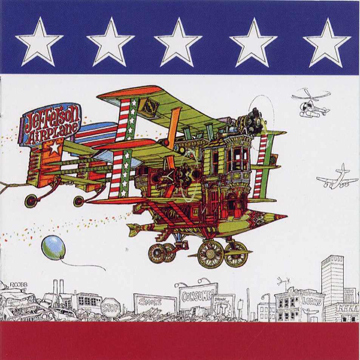
In honor of Kantner’s memory, this week’s pick is ”The Ballad Of You And Me And Pooneil,” by The Jefferson Airplane. The song was written by Kantner, who plays guitar and shares lead vocals with Grace Slick and Marty Balin. This is a live version, featuring a pretty cool solo by bassist Jack Casady; guitarist Jorma Kaukonen and drummer Spencer Dryden round out the classic lineup. For a sonically better version check out the original recording on their 1967 album ”After Bathing At Baxter’s.”

This song kind of typifies for me the things that I loved (and that many people hated) about this band, the three-part vocals, the wild and wooly solos, the opaque, surrealistic lyrics. Yes, Grace often sings flat, but I tend to blame the monitor situations (and maybe the acid). And Kantner’s voice is an acquired taste, but he fills a nice little sonic niche between Balin and Slick. In this video (which I have never seen before) it’s obvious that Balin and Slick are like fire and ice at the heart of the band, contributing different kinds of soulfulness. Kantner is the architect and the intellect, staying out of the spotlight but definitely the man behind the curtain. Kaukonen is the flash and Dryden is the glue, but it’s obvious that Casady is the throbbing engine that drives the band.

You can view the video here:

https://www.youtube.com/watch?v=lHmiFHzPqbM


This post is reprinted from News From The Trenches, a weekly newsletter of commentary from the viewpoint of a working musician published by Chicago bassist Steve Hashimoto. If you’d like to start receiving it, just let him know by emailing him at steven.hashimoto@sbcglobal.net.


Hash’s Faves: “Upa Neguina”/”O Morro Nao Tem Vez (Favela)

25 Jan

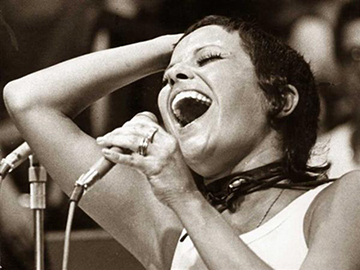
elis-regina1This week’s pick is from Brasil, a samba medley of the songs ”Upa Neguinha, O Morro Não Tem Vez (Favela)” and another song that I’m not familiar with, but I bet there are a bunch of you out there that can help out. They’re performed by the great singer Elis Regina and Jair Rodrigues. Upa was written by Edu Lobo and Gianfrancesco Guarnieri, and O Morro by Antonio Carlos Jobim and Vinicius de Moraes. Both songs portray the political scene in Brasil in the 60’s, when it was ruled by a military dictatorship and the gulf between the wealthy and the impoverished was great.

Even with the poor video quality, Regina’s life-force is almost overwhelming; I have to admit that I’m in love with this woman, as most of Brasil was. It looks like the last half of this clip was a mini-documentary about life in the favelas, and if anyone knows anything more about I’d love to know.

My introduction to Brasilian music was through my friend, the late Mexican guitarist/singer Miguel Bermejo, and my education, like many others in Chicago, continued with the band Som Brasil (Made In Brasil), which had a long residency at the much-lamented club The Jazz Bulls. The band, of course, has had many members, but in the time that I regularly went to see them the band was comprised of leader/pianist Breno Sauer, vocalist Neussa Sauer, saxophonist Ron DeWar, guitarist Akio Sasajima, bassist Paulinho Garcia and drummer Luiz Ewerling. Neussa was very much influenced by Regina, and Breno was there at the beginning of bossa nova, back in Rio. Som Brasil’s sole album is extremely rare but worth searching for; it’s some of the most life-affirming music you’ll ever hear.

“O Morro Não Tem Vez” is extremely popular amongst jazz players, and in Chicago Som Brasil’s version was what most of us base our interpretations on. Brasilian Portuguese is a language that resists literal translation, I think; the title can be loosely translated as “There Are No Opportunities For The Hills.” The favelas, or slums, in Rio are mostly located on the mountainside of Corcovado or Sugarloaf Mountain; when it rains torrentially, the favelas often get washed right off of the mountainside. There’s a more-or-less literal translation of the lyrics online that says “The mountain has no chance, but when it gets it’s chance the whole city will sing.” Many of the Samba Schools originate in the favelas, and I guess the reading means that Carnaval time is the only time when the favelas get to be heard by the world, through the music. “Upa Neguinha”” means, more or less, “Rise up, Black Boy!”, a call for revolution that somehow slipped by the official censors.

You can listen to Regina’s video here:

This post is reprinted from News From The Trenches, a weekly newsletter of commentary from the viewpoint of a working musician published by Chicago bassist Steve Hashimoto. If you’d like to start receiving it, just let him know by emailing him at steven.hashimoto@sbcglobal.net.


Hash’s Faves: “Heroes” by David Bowie

18 Jan

By now I’m sure you’re all aware that musician/actor David Bowie died on Monday. Although I was never a dyed-in-the-wool fan, I’ve always respected his courage to explore new artistic directions, sometimes at the risk of alienating his fans. Many of his decisions were truly courageous, and he always bucked the prevailing winds. When everyone else had long hair and denim was de rigeur, he became Ziggy Stardust. When glam and flash took over during the disco years he became the Thin White Duke. When many rock stars had trophy blonde companions, he married the Somalian model Iman. He collaborated with John Lennon, Lou Reed, Iggy Pop, Brian Eno, Robert Fripp, Queen, Niles Rodgers and Trent Reznor. His canny public-relations savvy was evident from the start, when he changed his name from David Jones, knowing that the danger to his career from being confused with teen-pop idol Davy Jones of The Monkees would derail any chance at being considered a serious artist. Bowie’s acting career actually predates his musical career; as one might expect from someone who inhabited so many different personas as a musician, he was very good in front of the cameras. He was 69, and he leaves an enduring and fascinating legacy.

This week’s pick is kind of a duplicate; on Oct. 4, 2010 my Hash’s Fave was David Bowie’s “Heroes.” This is a live performance from 1996, at the benefit concert for Pegi Young’s Bridge School, an educational program aimed at serving the needs of children with severe physical and speech impairments. He sings some new lyrics here, and he’s joined by Gail Ann Dorsey on bass and vocals and Reeves Gabrels on guitar.

Although this is an acoustic version, I think it’s worth revisiting what I wrote about the initial recording of the song:

This week’s entry is rock. It’s David Bowie’s “Heroes”, a song never released on any proper Bowie album. It was released as a single in 1977, and has subsequently been released in a bewildering number of versions and languages, as singles, parts of EPS and on Greatest Hits compilations.

The song was produced by Tony Visconti; King Crimson guitarist Robert Fripp contributed heavily-processed guitar and Brian Eno played synthesizer. The other musicians are Carlos Alomar on guitar, George Murray on bass and Dennis Davis on drums (Visconti has occasionally claimed that he played drums and sang backup on the track).

Bowie did not write lyrics for it until the track had been completed, but Eno says that they always had the concept of “heroes” in mind. The song was recorded at Hansa Studios in West Berlin; the studio overlooks the Berlin Wall, and the lyrics that Bowie wrote refer to that proximity. Visconti was conducting a dalliance with the vocalist Antonia Maas; they had slipped out of the sessions and were kissing, literally up against the Wall, providing the central imagery for the song.

I first read about Visconti’s unusual production methods for this track many years ago, and I continue to be impressed with the intuitive flash of genius that gives the track it’s vibe. The room they were recording in at Hansa was a large, stone room, with great natural reverb and ambience (Visconti especially loved using it as a live drum room). Rather than recording Bowie’s overdubbed vocals close and dry, as was the prevailing studio methodology of the time, Visconti put Bowie in the live room (rather than in the vocal booth). He then set up three microphones; one close, as was usually done; another 20 feet away, and the last 50 feet away (like I said, it was a LARGE room). He then put noise gates on the two far mics, set to open up when Bowie’s vocals passed pre-set volume levels. And rather than listen to the recorded track on headphones, the track was played back in the room through speakers. Bowie sang the first verse fairly quietly, so only the close mic was activated. Bowie sang the second verse a little louder, opening up the 2nd mic, and allowing more of the backing track and the room’s air and reverb in. The third verse was sung at maximum rocking level, opening up the final mic; of course from 50 feet away not much of the vocal came through clearly, but the room’s ambience did, resulting in a sound completely unlike what prevailed in the industry at the time.

You can listen to it at the link below:


This post is reprinted from News From The Trenches, a weekly newsletter of commentary from the viewpoint of a working musician published by Chicago bassist Steve Hashimoto. If you’d like to start receiving it, just let him know by emailing him at steven.hashimoto@sbcglobal.net.

Live Music VS Sand Painting

15 Nov

sand paintingLive music rivals sand-painting as impermanence’s perfect symbol. I believe that. A band works up songs for weeks and then goes out and plays. When the show’s over, what’s left? Or when a sand painting blows away?

A while ago we got a Zoom video recorder. Around a cell-phones’s size, it sports a couple condenser mikes. We started recording our shows and hoping they’ll be around forever. We’re stashing them in a time capsule. A lot of them here are on this blog, too: Just click the “Making Music” category.

The McDaniels @ Heartland Cafe

The McDaniels @ Heartland Cafe

When we play we forget the camera. But what if some corner of our mind still sees it– maybe in peripheral vision?

What if?

So we’re not recording our next show. At Independence Tap, 3932 W. Irving Park, Chicago. This coming Friday, November 20 at 8:00 PM. Let’s see how that feels.

Like we’re sand painting.

The McDaniels behind the Backlot Bash.

The McDaniels behind the Backlot Bash.

Hash’s Fave’s: “The Idiot Bastard Son”

17 Oct

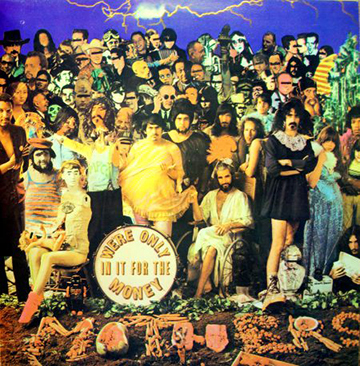
We_re_Only_In_It_For_The_MoneyThis week’s pick is Frank Zappa’s “The Idiot Bastard Son,” from the 1968 Mothers Of Invention album ”We’re Only In It For The Money” (my memory was jogged because my old friend John Melnick sent me a copy of the extremely rare Frank Zappa Songbook, which I’m going to clean up and maybe put into Finale for him, and me). The version here is the original album version, although it’s slightly different from the version that I initially heard (explanation below). The primary performers are the original Mothers band – Zappa on guitar and vocals; Euclid James “Motorhead” Sherwood and Bunk Gardner, saxophones; Ian Underwood, keyboards and saxophones; Don Preston, keyboards; Roy Estrada, bass and vocals; and Billy Mundi and Jimmy Carl Black, drums and percussion.

Most of the recording sessions took place in New York city, after the Mothers relocated from L.A., pretty much fleeing what they perceived to be a repressive societal matrix where the police routinely harassed them and prevented them from playing gigs, but I wonder if some of the session were begun in L.A., and may have utilized members of L.A.’s ”Wrecking Crew” group of studio players. This record was part of a four-album conceptual suite, consisting of ”Lumpy Gravy,” “Cruisin’ With Ruben and The Jets” and ”Uncle Meat.” Cameo appearances by various members of the L.A. groupie scene as well as rock stars Eric Clapton, Rod Stewart and Tim Buckley in some of the musique concrete pieces foreshadow Zappa’s relation to the world of mainstream rock (Flo and Eddie, Lowell George, etc.); Jimi Hendrix also appears in the original cover photo, a parody of the Beatles’ “Sgt. Pepper’s Lonely Hearts Club Band” iconic photo.

The version of this song that I’m more familiar with (and the differences are slight, but definite) was from a sort of greatest hits compilation called ”Mothermania,” released by MGM/Verve. Several of the recordings on that record are either different mixes, different edits or different performances altogether than the albums from which they’re ostensibly drawn from; it’s all a bit confusing. Zappa had notoriously contentious relations with all of his record companies and was constantly getting into censorship trouble. The Mothermania compilation is worth seeking out if you’re a Zappa completist.

It angers me that so many people only think of Zappa in terms of his bathroom humor material (“Don’t Eat The Yellow Snow,” etc.). He was a sharp commentator on the social and cultural scene, and he was definitely a total non-conformist, just as disgusted with the hippies as he was with Nixon/Agnew et al. His song ”Trouble Every Day” is a scathing indictment of almost every aspect of American society, and should be played on every college radio station, every day. He had aspirations to be a classical music composer, and although many have mixed feelings about his work in that field, I’ve always enjoyed it. He had a well-known disdain for jazz (he literally hated the ii-V-I chord change, which is the bedrock of jazz), but he continually hired musicians either from the jazz world (George Duke, various Brubecks) or rock players with jazz chops (Steve Vai, Scott Thunes). In short, I always felt that he felt free to do whatever he felt was important regardless of how any action might contradict his perceived public persona.

I finally achieved one of my bucket list wishes, playing this song in John Kimsey’s Twisted Roots Ensemble. Thanks, John.

You can listen to it here:

This post is reprinted from News From The Trenches, a weekly newsletter of commentary from the viewpoint of a working musician published by Chicago bassist Steve Hashimoto. If you’d like to start receiving it, just let him know by emailing him at steven.hashimoto@sbcglobal.net.

Hash’s Faves (“California Sun”)

26 Sep


the_rivieras-california_sunThis week’s pick is total guilty-pleasure, end-of-summer stuff; I’ve always stressed that this ain’t music criticism but stuff that I love, for whatever inane reasons. It’s the 1964 teen classic ”California Sun” by The Rivieras.

The Rivieras were a band from South Bend, Indiana; totally ironic that their big hit was one of the defining songs of the frat rock/surf/hot rod movement. The band members at the time (as far as I can tell) were Marty “Bo” Fortson, vocals and rhythm guitar, Joe Pennell, lead guitar (remember when you had a “rhythm” guitarist and a “lead” guitarist?), Otto Nuss, organ and piano, Doug Gean, bass, and Paul Denner, drums. The song was written by Henry Glover, a prolific African-American songwriter whose other big hit was ”The Peppermint Twist.” It’s probable that none of the original band members had ever seen a wave or surfed in their lives, but Hot Rods and Hot Rod culture were a thing in Indiana, so I guess they have a certain amount of street cred. And they probably contributed greatly to the sales of Farfisa organs.

In 1964, even though I was still 7 years away from being able to drive, I was a total Hot Rod nut. I built model cars (anyone out there remember Bud “Kat” Anderson?), drew ”Rat Fink” sweatshirts for the local juvenile delinquents, went to the occasional drag race at U.S. 30, and read all of the car magazines. I believe among the first 45’s I ever bought were the Beach Boys’ “Get Around,” Jan & Dean’s “Little Old Lady From Pasadena,” and this.

You can listen to it here:

This post is reprinted from News From The Trenches, a weekly newsletter of commentary from the viewpoint of a working musician published by Chicago bassist Steve Hashimoto. If you’d like to start receiving it, just let him know by emailing him at steven.hashimoto@sbcglobal.net.