Archive | pop culture RSS feed for this section

Hash’s Faves: “Heroes” by David Bowie

18 Jan

By now I’m sure you’re all aware that musician/actor David Bowie died on Monday. Although I was never a dyed-in-the-wool fan, I’ve always respected his courage to explore new artistic directions, sometimes at the risk of alienating his fans. Many of his decisions were truly courageous, and he always bucked the prevailing winds. When everyone else had long hair and denim was de rigeur, he became Ziggy Stardust. When glam and flash took over during the disco years he became the Thin White Duke. When many rock stars had trophy blonde companions, he married the Somalian model Iman. He collaborated with John Lennon, Lou Reed, Iggy Pop, Brian Eno, Robert Fripp, Queen, Niles Rodgers and Trent Reznor. His canny public-relations savvy was evident from the start, when he changed his name from David Jones, knowing that the danger to his career from being confused with teen-pop idol Davy Jones of The Monkees would derail any chance at being considered a serious artist. Bowie’s acting career actually predates his musical career; as one might expect from someone who inhabited so many different personas as a musician, he was very good in front of the cameras. He was 69, and he leaves an enduring and fascinating legacy.

This week’s pick is kind of a duplicate; on Oct. 4, 2010 my Hash’s Fave was David Bowie’s “Heroes.” This is a live performance from 1996, at the benefit concert for Pegi Young’s Bridge School, an educational program aimed at serving the needs of children with severe physical and speech impairments. He sings some new lyrics here, and he’s joined by Gail Ann Dorsey on bass and vocals and Reeves Gabrels on guitar.

Although this is an acoustic version, I think it’s worth revisiting what I wrote about the initial recording of the song:

This week’s entry is rock. It’s David Bowie’s “Heroes”, a song never released on any proper Bowie album. It was released as a single in 1977, and has subsequently been released in a bewildering number of versions and languages, as singles, parts of EPS and on Greatest Hits compilations.

The song was produced by Tony Visconti; King Crimson guitarist Robert Fripp contributed heavily-processed guitar and Brian Eno played synthesizer. The other musicians are Carlos Alomar on guitar, George Murray on bass and Dennis Davis on drums (Visconti has occasionally claimed that he played drums and sang backup on the track).

Bowie did not write lyrics for it until the track had been completed, but Eno says that they always had the concept of “heroes” in mind. The song was recorded at Hansa Studios in West Berlin; the studio overlooks the Berlin Wall, and the lyrics that Bowie wrote refer to that proximity. Visconti was conducting a dalliance with the vocalist Antonia Maas; they had slipped out of the sessions and were kissing, literally up against the Wall, providing the central imagery for the song.

I first read about Visconti’s unusual production methods for this track many years ago, and I continue to be impressed with the intuitive flash of genius that gives the track it’s vibe. The room they were recording in at Hansa was a large, stone room, with great natural reverb and ambience (Visconti especially loved using it as a live drum room). Rather than recording Bowie’s overdubbed vocals close and dry, as was the prevailing studio methodology of the time, Visconti put Bowie in the live room (rather than in the vocal booth). He then set up three microphones; one close, as was usually done; another 20 feet away, and the last 50 feet away (like I said, it was a LARGE room). He then put noise gates on the two far mics, set to open up when Bowie’s vocals passed pre-set volume levels. And rather than listen to the recorded track on headphones, the track was played back in the room through speakers. Bowie sang the first verse fairly quietly, so only the close mic was activated. Bowie sang the second verse a little louder, opening up the 2nd mic, and allowing more of the backing track and the room’s air and reverb in. The third verse was sung at maximum rocking level, opening up the final mic; of course from 50 feet away not much of the vocal came through clearly, but the room’s ambience did, resulting in a sound completely unlike what prevailed in the industry at the time.

You can listen to it at the link below:


This post is reprinted from News From The Trenches, a weekly newsletter of commentary from the viewpoint of a working musician published by Chicago bassist Steve Hashimoto. If you’d like to start receiving it, just let him know by emailing him at steven.hashimoto@sbcglobal.net.
Hash’s Faves: “Pressed Rat and Warthog”

11 Dec

cream_wheels
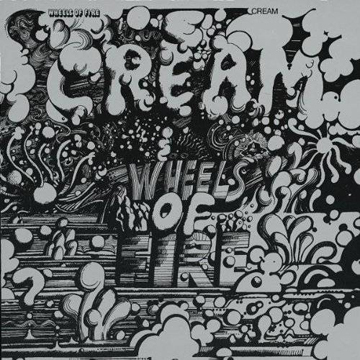
This week’s pick is Cream’s “Pressed Rat and Warthog,” from their 1968 album Wheels Of Fire. The song was written by British composer/pianist Mike Taylor, with lyrics by Ginger Baker. Baker plays drums, of course, and intones the lyrics in his Cockney accent; Eric Clapton plays guitars, Jack Bruce plays bass and recorders, and producer Felix Pappalardi plays trumpet and tonette.

This record was Cream’s magnum opus, a double album that was divided into studio and live recordings, showing the band’s diversity – their blues derivations, the jazzier live explorations of blues material, and psychedelia, under which umbrella I’d say this song falls. For years I’d always assumed (even though I’m an inveterate album credit reader) that this was a Jack Bruce/Peter Brown song because of the surreal lyrics and the music, with it’s nod to classical music. After seeing the great documentary Beware Mr. Baker I can see how Ginger was capable of writing these words; modern medicine, I’d guess. I know nothing about Mike Taylor other than what Wikipediatells me. The YouTube comments thread also tells me that the strong melody that Bruce plays at the beginning of Clapton’s solo is a traditional English folk tune called ”Green Bushes;” the solo fades out, but I’d love to hear the complete take.

Pappalardi was one of rock music’s shadowy figures. He produced Cream’s Disraeli Gears and Goodbye albums, but is best-known as the bassist, producer and founding member of the hard-rock band Mountain, along with guitarist/vocalist Leslie West. Felix had a long and fascinating career, starting in a trad Dixieland band in New York city, and going on to rack up sideman, arranging, conducting and production credits with an eclectic who’s-who of 60’s and 70’s artists, including Richie Havens, Ian and Sylvia, Joan Baez, The Youngbloods, Mimi and Richard Fariña, Jack Bruce, Tom Paxton, Buffy Saint-Marie, John Sebastian, Hot Tuna, and Chicago’s own The Flock. He was a multi-instrumentalist; I seem to recall that on some of the Cream recordings he also played orchestral bells, viola, organ and mellotron. He co-wrote Cream’s song ”Strange Brew”with his wife, Gail Collins; she would wind up shooting Pappalardi to death in 1983.

You can listen to it here:

http://www.youtube.com/watch?v=fDgokYi-1lI

This post is reprinted from News From The Trenches, a weekly newsletter of commentary from the viewpoint of a working musician published by Chicago bassist Steve Hashimoto. If you’d like to start receiving it, just let him know by emailing him at steven.hashimoto@sbcglobal.net.


Live Music VS Sand Painting

15 Nov

sand paintingLive music rivals sand-painting as impermanence’s perfect symbol. I believe that. A band works up songs for weeks and then goes out and plays. When the show’s over, what’s left? Or when a sand painting blows away?

A while ago we got a Zoom video recorder. Around a cell-phones’s size, it sports a couple condenser mikes. We started recording our shows and hoping they’ll be around forever. We’re stashing them in a time capsule. A lot of them here are on this blog, too: Just click the “Making Music” category.

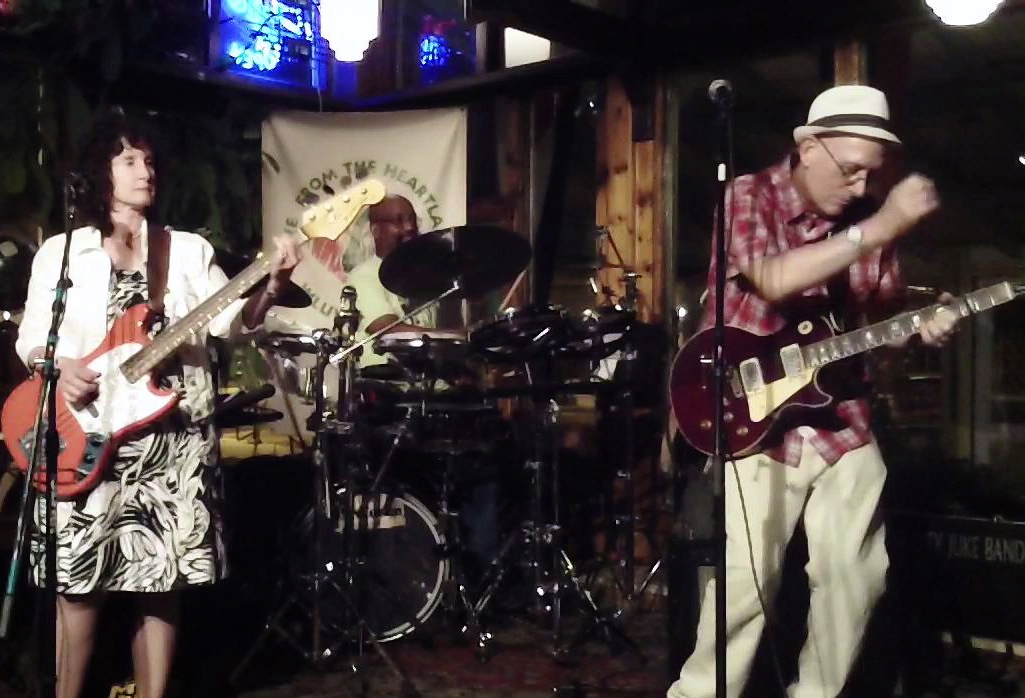
The McDaniels @ Heartland Cafe

The McDaniels @ Heartland Cafe

When we play we forget the camera. But what if some corner of our mind still sees it– maybe in peripheral vision?

What if?

So we’re not recording our next show. At Independence Tap, 3932 W. Irving Park, Chicago. This coming Friday, November 20 at 8:00 PM. Let’s see how that feels.

Like we’re sand painting.

The McDaniels behind the Backlot Bash.

The McDaniels behind the Backlot Bash.

Hash’s Fave’s: “The Idiot Bastard Son”

17 Oct

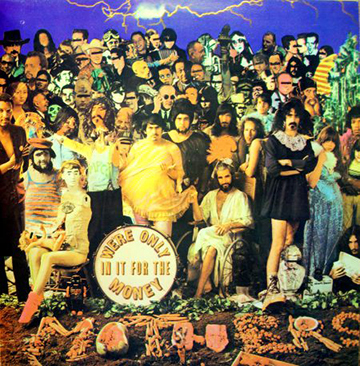
We_re_Only_In_It_For_The_MoneyThis week’s pick is Frank Zappa’s “The Idiot Bastard Son,” from the 1968 Mothers Of Invention album ”We’re Only In It For The Money” (my memory was jogged because my old friend John Melnick sent me a copy of the extremely rare Frank Zappa Songbook, which I’m going to clean up and maybe put into Finale for him, and me). The version here is the original album version, although it’s slightly different from the version that I initially heard (explanation below). The primary performers are the original Mothers band – Zappa on guitar and vocals; Euclid James “Motorhead” Sherwood and Bunk Gardner, saxophones; Ian Underwood, keyboards and saxophones; Don Preston, keyboards; Roy Estrada, bass and vocals; and Billy Mundi and Jimmy Carl Black, drums and percussion.

Most of the recording sessions took place in New York city, after the Mothers relocated from L.A., pretty much fleeing what they perceived to be a repressive societal matrix where the police routinely harassed them and prevented them from playing gigs, but I wonder if some of the session were begun in L.A., and may have utilized members of L.A.’s ”Wrecking Crew” group of studio players. This record was part of a four-album conceptual suite, consisting of ”Lumpy Gravy,” “Cruisin’ With Ruben and The Jets” and ”Uncle Meat.” Cameo appearances by various members of the L.A. groupie scene as well as rock stars Eric Clapton, Rod Stewart and Tim Buckley in some of the musique concrete pieces foreshadow Zappa’s relation to the world of mainstream rock (Flo and Eddie, Lowell George, etc.); Jimi Hendrix also appears in the original cover photo, a parody of the Beatles’ “Sgt. Pepper’s Lonely Hearts Club Band” iconic photo.

The version of this song that I’m more familiar with (and the differences are slight, but definite) was from a sort of greatest hits compilation called ”Mothermania,” released by MGM/Verve. Several of the recordings on that record are either different mixes, different edits or different performances altogether than the albums from which they’re ostensibly drawn from; it’s all a bit confusing. Zappa had notoriously contentious relations with all of his record companies and was constantly getting into censorship trouble. The Mothermania compilation is worth seeking out if you’re a Zappa completist.

It angers me that so many people only think of Zappa in terms of his bathroom humor material (“Don’t Eat The Yellow Snow,” etc.). He was a sharp commentator on the social and cultural scene, and he was definitely a total non-conformist, just as disgusted with the hippies as he was with Nixon/Agnew et al. His song ”Trouble Every Day” is a scathing indictment of almost every aspect of American society, and should be played on every college radio station, every day. He had aspirations to be a classical music composer, and although many have mixed feelings about his work in that field, I’ve always enjoyed it. He had a well-known disdain for jazz (he literally hated the ii-V-I chord change, which is the bedrock of jazz), but he continually hired musicians either from the jazz world (George Duke, various Brubecks) or rock players with jazz chops (Steve Vai, Scott Thunes). In short, I always felt that he felt free to do whatever he felt was important regardless of how any action might contradict his perceived public persona.

I finally achieved one of my bucket list wishes, playing this song in John Kimsey’s Twisted Roots Ensemble. Thanks, John.

You can listen to it here:

This post is reprinted from News From The Trenches, a weekly newsletter of commentary from the viewpoint of a working musician published by Chicago bassist Steve Hashimoto. If you’d like to start receiving it, just let him know by emailing him at steven.hashimoto@sbcglobal.net.
Hash’s Faves (“California Sun”)

26 Sep


the_rivieras-california_sunThis week’s pick is total guilty-pleasure, end-of-summer stuff; I’ve always stressed that this ain’t music criticism but stuff that I love, for whatever inane reasons. It’s the 1964 teen classic ”California Sun” by The Rivieras.

The Rivieras were a band from South Bend, Indiana; totally ironic that their big hit was one of the defining songs of the frat rock/surf/hot rod movement. The band members at the time (as far as I can tell) were Marty “Bo” Fortson, vocals and rhythm guitar, Joe Pennell, lead guitar (remember when you had a “rhythm” guitarist and a “lead” guitarist?), Otto Nuss, organ and piano, Doug Gean, bass, and Paul Denner, drums. The song was written by Henry Glover, a prolific African-American songwriter whose other big hit was ”The Peppermint Twist.” It’s probable that none of the original band members had ever seen a wave or surfed in their lives, but Hot Rods and Hot Rod culture were a thing in Indiana, so I guess they have a certain amount of street cred. And they probably contributed greatly to the sales of Farfisa organs.

In 1964, even though I was still 7 years away from being able to drive, I was a total Hot Rod nut. I built model cars (anyone out there remember Bud “Kat” Anderson?), drew ”Rat Fink” sweatshirts for the local juvenile delinquents, went to the occasional drag race at U.S. 30, and read all of the car magazines. I believe among the first 45’s I ever bought were the Beach Boys’ “Get Around,” Jan & Dean’s “Little Old Lady From Pasadena,” and this.

You can listen to it here:

This post is reprinted from News From The Trenches, a weekly newsletter of commentary from the viewpoint of a working musician published by Chicago bassist Steve Hashimoto. If you’d like to start receiving it, just let him know by emailing him at steven.hashimoto@sbcglobal.net.
“Don’t Take Your smell To Town”

9 Sep
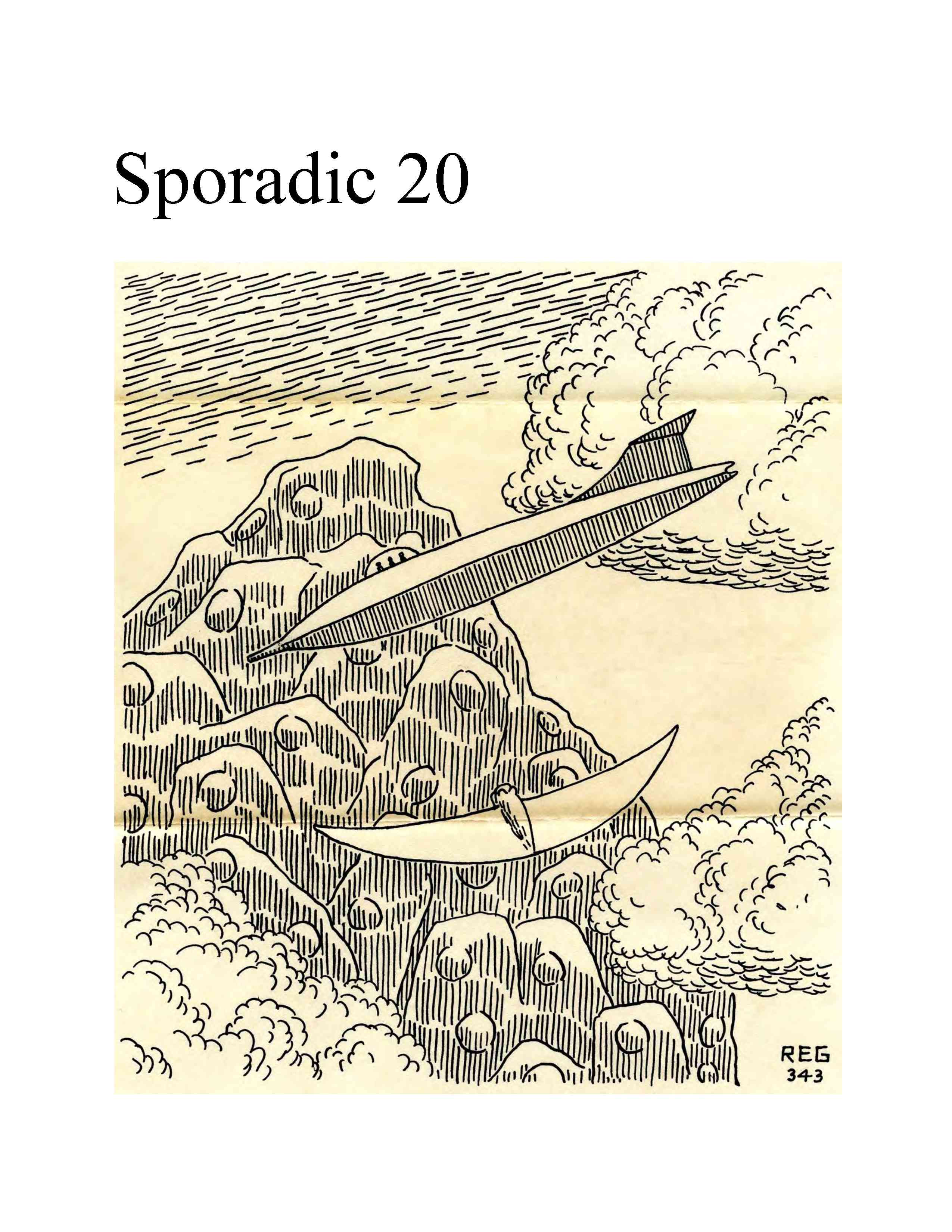
cover by Robert E. Gilbert

cover by Robert E. Gilbert

I’m embedding some audio and lyrics in this post, but first some background:

In 1958 Johnny Cash’s “Don’t Take Your Guns To Town” was #1 on the country charts for six weeks. It’s a lugubrious little ditty about a young cowboy who decides to go to town, ignores his mom’s advice to leave his guns at home, and ends up getting gunned down. (This was back when a country act could release an anti-handgun song without kissing his or her career bye-bye.) Around 1962 Howard Shockley, a teenage science-fiction fan from Opelika, Alabama, wrote “Don’t Take Your Smell To Town,”a parody to be sung to the same melody as Cash’s song. In SF fandom such tunes are called filk songs, and I think Shockley’s was a gem. It concerned a young sanitation worker who lived in the city dump and ignored the advice of the song’s title.

The protagonists of both songs were named Billy Joe, and Shockley presented his composition to his buddy at Opelika High, Bill Plott, who himself went by Billy Joe. Plott was fellow SF fan, and quicker than you could say “Great Ghu!”, published Shockley’s filk song in his fanzine, Maelstrom. Plott, for reasons too numerous and largely unspeakable to mention, is actually now somewhat of a legend in SF fandom, but around 1968 he left that subculture for what was to prove many decades. He got drawn back into the fold only in 2012 when he was invited as Guest of Honor at Deep South Con 50. That happy trip inspired him to revive another of his fanzines from long ago, Sporadic, and he has published it bimonthly since. By coincidence, around the same time, Plott reconnected with his old pal Howard Shockley, now a Presbyterian minister in South Carolina. In Sporadic #20 Plott reprinted “Don’t Take Your Smell To Town” much to his old friend’s dismay surprise.

I like to think–imagine, say some–that I can play guitar and sing, and when I saw the lyrics in Sporadic, thought, “Gee, I should record that.” Like most thoughts requiring effort from me if acted on, it was promptly forgotten. Then a few weeks ago, out of the blue, I found myself going into The GarageBand app on my Mac and recording “Don’t Take Your Smell To Town.” Personally, I think The Devil made me do it.

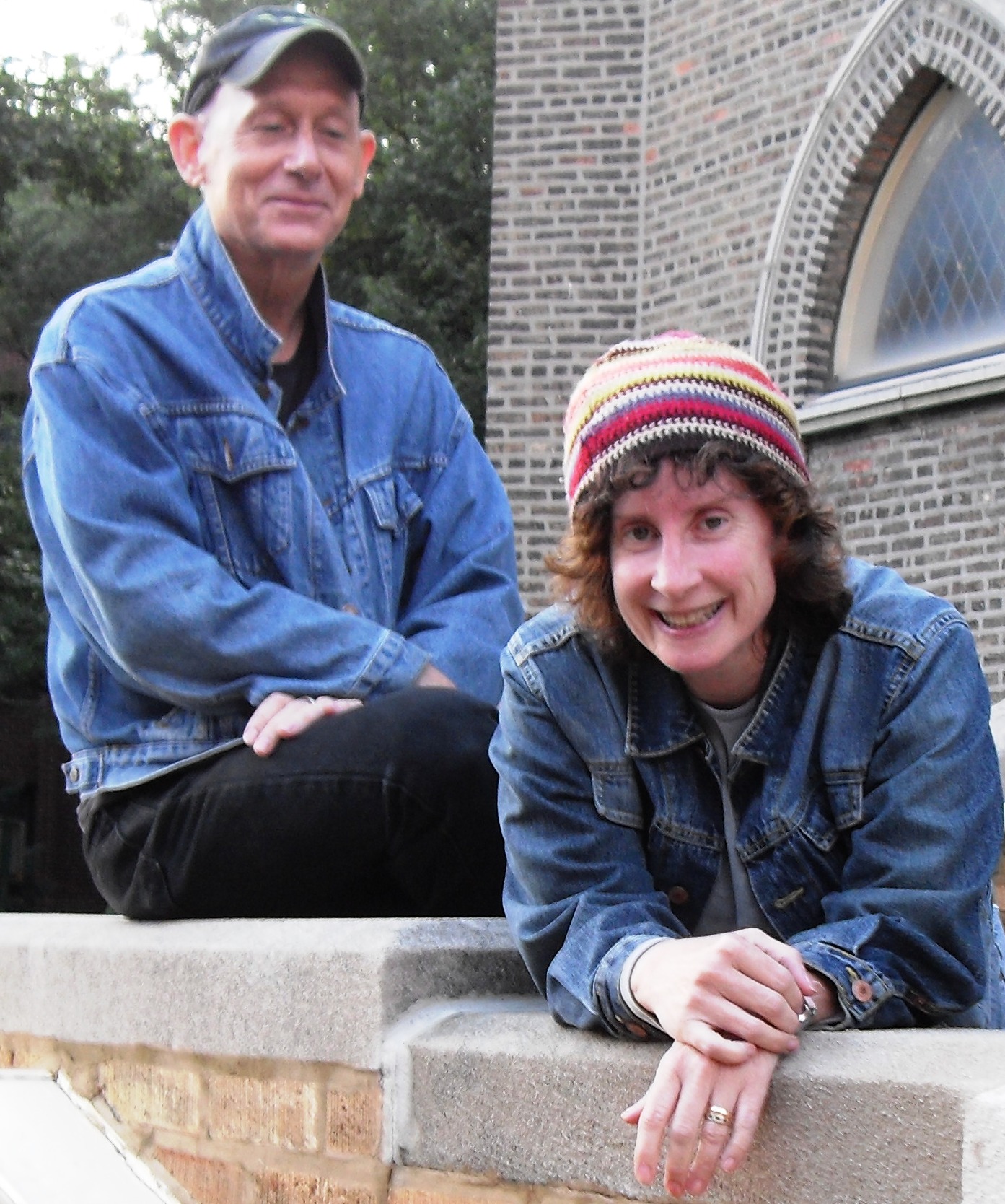
If you want–and how could you not?- you can click on the hypertext below to hear the result. For the record (no pun intended) I’m playing everything on the song except the snare drum. That, I talked my wife Dorothy into playing. Howard Shockley’s lyrics are below the recording.

Don’t_Take_Your_Smell_To_Town_080715

DON’T TAKE YOUR SMELL TO TOWN

By Howard Shockley

A D.S.* boy named Billy Joe grew restless in the Dumps.

He looked across the sea of trash while sitting on a stump.

He said, “I think I’ll leave today to see the whole world ‘round.”

But then he heard his partner say, “Don’t take your smell to town, boy.

You’d better stay at home, Bill.

Don’t take your smell to town.”

Bill just smiled and said to him, “Your boy’s become a man.

“I’ll take a bath, use Listerine, and roll myself in Ban.

“This Air-Wick, too, will help a lot to keep the odor down.”

But again he heard his partner say,

“Don’t take your smell to town, boy;

They’ll run you out of town, Bill.

Don’t take your smell to town.”

Bill jumped in the garbage truck and gave the switch a turn,

The wheels dug in the greasy muck and caused the stuff to churn;

As he drove along the trail, he said “At last, I’m City bound!”

But then echoed the words again, “Don’t take your smell to town, boy;

You’d better stay at home, Bill;

Don’t take your smell to town.”

Bill rode in the little town, a smile across his face;

And of that smell that used to be there wasn’t any trace.

But later on that afternoon, the folks began to frown;

Again he heard the warning words,

“Don’t take your smell to town, boy;

“Leave it here at home, Bill,

Don’t take your smell to town.”

Bill walked in a small saloon to get himself a drink;

A cowpoke cried aloud to all, “Say, what the hell’s that stink?”

Bill put down his drink and saw that no one was around.

Again, he heard the fateful words,

“Don’t take your smell to town, boy;

You’d better stay at home, Bill.’

Don’t take your smell to town.”

Walking to his faithful truck, young Bill began to frown;

He’d left the Dumps to see the World, and it had put him down.

Riding off, he looked around and wondered with a sigh,

Who’d wrote the posters with the words:

“Take your smell from town, boy;

Don’t leave it here with us.

And please don’t take the bus!”

Toward the setting sun he rode, not ever looking back;

Nothing of the job he held could anything detract.

He’s there today, out in the Dumps, his Destiny fulfilled.

His watchword is that sound advice:

“Don’t take your smell to town boy;

You’d better stay at home, Bill.

Don’t take your smell to town.”

** DEPARTMENT OF SANITATION

The tune’s more fun if you’re familiar with Cash’s original, and you can hear that and read the lyrics at: https://www.youtube.com/watch?v=A74Wq0B1WrI.

Hash’s Faves: “Kid Charlemagne”

7 Sep

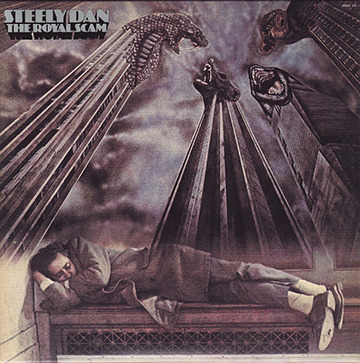
The_Royal_ScamThis week’s pick is by the band Steely Dan, “Kid Charlemagne,” from their 1976 album ”The Royal Scam.” It was written by Walter Becker and Donald Fagen and features Becker on guitar, Fagen on lead vocals, and the L.A. A-list session crew of Larry Carlton on guitar, Don Grolnick and Paul Griffin on keyboards, Chuck Rainey on bass, Bernard “Pretty” Purdie on drums, and Michael McDonald, Clydie King, Sherlie Matthews and Vanetta Fields on backing vocals.

This song pretty much has everything I look for and love about the best Dan tunes – interesting chord changes, an opaque story line delivered in Fagen’s world-weary voice, obscure cultural references, and of course stellar playing, arranging, production and recording. One story online has it that Fagen originally wanted Lee Ritenour for the session but he wasn’t available; when Carlton was hired Fagen asked him to play the solo in Ritenour’s style (you can take this with a grain of salt).

Both Fagen and Becker have said that the broad inspiration for the song was legendary LSD chemist Owsley Stanley, although Owsley has scoffed at the idea. I find it credible, although the lyrics can also be fit to a storyline about anything from rock cocaine to meth. The “Technicolor motorhome” certainly refers to Ken Kesey and The Merry Pranksters’ day-glo bus Furthur, and an online commenter has also said that the “Is there gas in the car” line refers to an incident where Stanley got busted because he ran out gas. Whatever the case, I’ve always loved the mystery in this quintessential L.A.-in-the-70’s lyric.

As a sidebar, no one who is on speaking terms with me can corroborate this (meaning my girlfriend from the time), but back in the early 90’s I had the brilliant idea to start a Steely Dan tribute band. We were playing a lot of Dan tunes on the legendary Famous Pizza Gig (Monday nights at Bacino’s on East Wacker Drive), and we had some good charts. My idea was to use guitarist Steve Hutchins on vocals (and guitar of course), Neal Alger or John Lewis on guitar, Carter Luke on keys, Heath Chappell on drums and Mike Levin on saxes. I never quite got around to organizing it, of course, and now the landscape is dotted with Dan bands. Just sayin’…

You can listen to it here: https://www.youtube.com/watch?v=uGr6knsm8t0

This post is reprinted from News From The Trenches, a weekly newsletter of commentary from the viewpoint of a working musician published by Chicago bassist Steve Hashimoto. If you’d like to start receiving it, just let him know by emailing him at steven.hashimoto@sbcglobal.net.
Hash’s Faves: “Sandu”

31 Aug

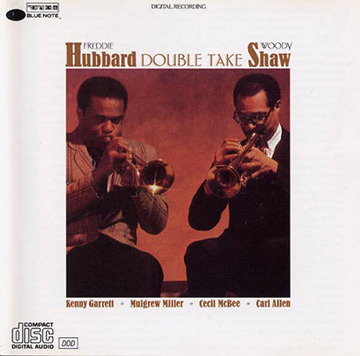
Double_TakeThis week’s pick is one of my favorite jazz blues tunes, ”Sandu,” written by the majestic trumpeter Clifford Brown, and in this case recorded by the awe-inspiring duo of Woody Shaw and Freddie Hubbard. It’s from their 1985 duo album ”Double Take,”and features Shaw and Hubbard on trumpets, Kenny Garrett on alto sax, Mulgrew Miller on piano, Cecil McBee on bass and Carl Allen on drums.

Shaw takes the first solo, and after the 16th-note line he rips in his third chorus I can just picture him taking the horn off of his face and grinning at Freddie, like “How ‘bout that?” Freddie, of course, rises to the challenge, but I think I still dig Woody’s solo better.

It’s interesting to note that Miller was only 30 years old at the time of this recording, Garrett was only 25 and Allen was 26. McBee was the senior sideman, at 50. He’s one of my favorite bassists, and as we were watching a DVD of Blue Note records’ anniversary concerts in New York, McBee was featured with, I think, Roy Hutcherson, and Nancy said “He reminds me of you.” Quite a compliment, which I take with a grain of salt, but he’s definitely one of the cats I model my playing on. Longtime readers may recall that although I’m strictly an electric bass guitarist, unlike most bassists my age my first gigs on the instrument were bebop gigs, rather than the path usually taken by pork-chop players (whose first gisg were usually rock or blues or r and b gigs). The bassists I listened to as I was learning how to play were Cecil, Ray Brown, Ron Carter, Paul Chambers, Percy Heath, Mingus, Keter Betts, Jim Hughart, Stanley Clarke, Nils Henning Orsted-Pederson and Dave Holland (would that I had absorbed more than I did!).

Sad to think that within 4 years Shaw would die. Freddie died in 2008, after a celebrated career that spanned post-bop, free jazz and fusion, and I’m glad that I had a chance to at least meet him, if not play with him. I first became aware of Shaw when he released his ”Rosewood” album in 1978, when I was still a new jazz listener. I loved his playing, being an ex-trumpeter, but his harmonic sophistication was probably beyond me at the time (probably still is). Tragically, he was only 45 when he died, and hadn’t achieved the fame he deserved, although he was considered a trumpet player’s trumpet player.

You can listen to it here: https://www.youtube.com/watch?v=hm4_4tPbXxA

This post is reprinted from News From The Trenches, a weekly newsletter of commentary from the viewpoint of a working musician published by Chicago bassist Steve Hashimoto. If you’d like to start receiving it, just let him know by emailing him at steven.hashimoto@sbcglobal.net.

Hash’s Faves: “Mexico”

27 Aug

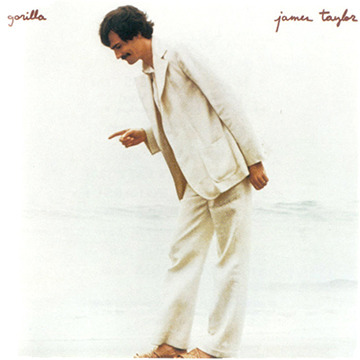
GorillaThis week’s pick is an old tune by singer/songwriter James Taylor, “Mexico.” It’s from his 1975 album Gorilla and features Taylor on guitar and vocals, Milt Holland on percussion (I assume he plays the marimba part, although multi-instrumentalist Victor Feldman, who appears elsewhere, seems the more likely culprit), Gayle Levant on harp, David Crosby and Graham Nash on harmony vocals and the famed L.A. rhythm section team known as The Sectio, Danny “Kootch” Kortchmar on guitar, Leland Sklar on bass and Russ Kunkel on drums and shaker.

Taylor is an extremely thoughtful musician, not only as a lyricist but as a bandleader as well. His guitar-playing style is not the simple strumming-chords school of rhythm guitar, a la Bob Dylan (I know, I know, Dylan does occasionally use an Elizabeth Cotten style of finger-picking, but mostly he strums), but rather a carefully thought-out part of the arrangement of each song, as a whole, often interacting closely with the bass parts that Leland Sklar played. Sklar, for his part, is an extremely melodic player; his parts very rarely stick to simple roots and fifths, and he is one of my favorite players. (Jimmy Johnson, from the fusion band Flim and The BBS, took the bass chair over from Sklar, who held it for many years).

Taylor still suffers from the perception that all of his songs are serious and that he’s a humorless New Englander, but I think that nothing could be farther from the truth. Although I’ve never seen him live myself, I’ve watched many of his concert videos, and he seems to be a warm kind of guy with a dry sense of humor. This tune is very light-hearted and the arrangement is buoyant. Having Nash on harmonies helps add to the joyous atmosphere, I’d say.

Kootch had been with Taylor from the beginning of his career. After spending some time in England he relocated to California, where he became a session player for Carole King, touring with her as well. His work on King’s Tapestry album and his work with Taylor led to his becoming one of the first-call players in L.A., and he formed The Section with Sklar, Kunkel and keyboard player Craig Doerge. Their sound kind of defined L.A. pop music in the late 70’s and 80’s.

You can listen to it here: https://www.youtube.com/watch?v=PgkKjHN349I

This post is reprinted from News From The Trenches, a weekly newsletter of commentary from the viewpoint of a working musician published by Chicago bassist Steve Hashimoto. If you’d like to start receiving it, just let him know by emailing him at steven.hashimoto@sbcglobal.net.
Hash’s Faves: “I Feel Fine”

20 Aug


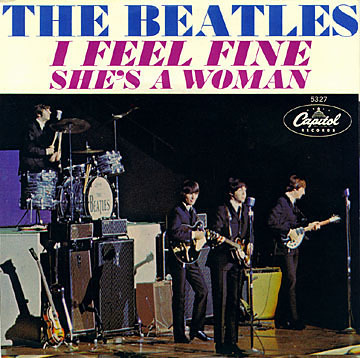
TI_Feel_Finehis week’s pick is a perfect little gem of a pop song by The Beatles: “I Feel Fine,” written by Lennon and McCartney. This was the A-side of their 1964 single, backed with ”She’s A Woman” (it was later included on their album ”Beatles ’65”; in those days albums were often just a collection of singles and filler). It’s just the Boys — John Lennon on guitar and vocals; Paul McCartney on bass and vocals; George Harrison on guitar and vocals; and Ringo Starr on drums.

This record is evidently the first recording to purposely feature feedback; the story is that John had leaned his semi-acoustic guitar up against an amp in the studio which, naturally, resulted in howling feedback. The Boys were just starting to feel their oats as studio auteurs and immediately asked producer George Martin if that sound could be incorporated into the song. Ringo has also said that his drum rhythm was based on the Latin-ish groove of Ray Charles’ “What’d I Say.” Although harmonically it’s a pretty simple tune, they do some deceptive things. And I love the vocal parts (I tend to like the songs where John sings lead simply because he’s so human; singing along in the car with Paul can be daunting).

You can listen to it here: https://www.youtube.com/watch?v=TE5hoaij79U

This post is reprinted from News From The Trenches, a weekly newsletter of commentary from the viewpoint of a working musician published by Chicago bassist Steve Hashimoto. If you’d like to start receiving it, just let him know by emailing him at steven.hashimoto@sbcglobal.net.