
In its latest ( 4-23-20) issue, the well known e-zine Blues Blast reviewed Tawl Paul’s album That’s Just How I Am, which was released around the start of 2020. Here’s the review:

|
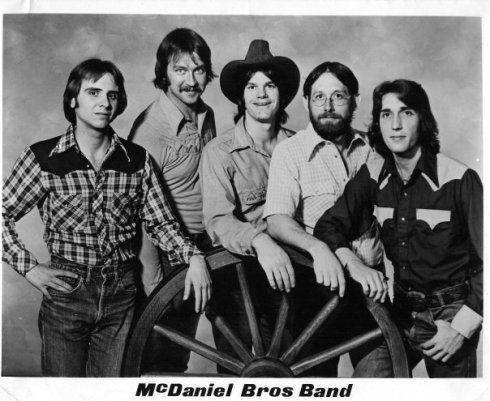
CD: 12 Songs, 42 Minutes Styles: Blues Covers, Traditional Electric and Acoustic Blues Perhaps no other musical genre is more intertwined with longevity than the blues. Rock has long verged from the path Elvis Presley and the Beatles trod. Country sounds less and less like Jimmie Rodgers and more and more like Luke Bryan. Move over, Madonna: Billie Eilish is fast becoming the Queen of Pop. In the blues world, however, the Waters are still Muddy and BB still reigns as King. Masters and originators are venerated, emulated, and invoked at every turn. Even Chicagoland’s Tawl Paul, on his latest CD, tips his hat to such greats as Bobby Charles (“Walking to New Orleans”), Hambone Willie Newborn (“Rollin’ and Tumblin’”), Richard M. Jones (“Trouble in Mind”), and John Prine (“Hello in There). The vast majority of these covers work – six in total – but some, such as “Autumn Leaves,” are a tad chaotic. The ensemble of artists is top-notch, and even though Paul’s vocals show his age, he remains a contender. His original work, such as “Baldheaded Blues” and the title track, are remarkably catchy. Growing up on Chicago’s South Side, Paul Frederick got hard by the blues and soul, falling in love with them. He grew up to serve with the Army in Vietnam, then came to Carbondale in the early 1970s to attend college. Soon afterward, he joined a band and discovered two things: He was born to sing, and Carbondale was his home. For fifty years, he’s sung the blues, making himself into one of the local scene’s most revered performers. He’s enriched Carbondale so much that in 2013, Mayor Joel Fritzler declared June 23rd Tawl Paul Day. On top of that, local bar PK’s now holds an annual Tawl Paul Weekend every June in his honor, with local music greats coming out and alumni returning in droves to pay homage. Along with Tawl Paul (vocals) are Kent McDaniel on guitars, bass and finger snaps; drummers Kegan Doty, Chris Butler, and Alpha Stewart; Mike Arthur and Mel Goot on keyboards; Dorothy McDaniel on flute and bass; Chris McKinley and Kathy Livingston on harmony vocals; Lew Hendrix on banjo, and John Temmermen on sax. “Baldheaded Blues” comes first out of Paul’s original material, a spot-on Chicago-style shuffle. “I’ve got these lines in my face, but I sure ain’t over that hill,” he tells a prospective lover with cheeky charm. Mel Goot’s piano keyboards are a hoot, as is Kent McDaniel’s guitar. “Big Jim” is a lot grittier and a little bit wittier, a ballad about another denizen of Chi-town’s South Side. The title track has an earworm refrain: “Hello, sir or ma’am. That’s just how I am.” Do people change? Maybe so or maybe not, but in the end one’s true character shines through. When local blues icons like Mr. Frederick continue to proclaim their love for the music and the fans who make it all possible, it often has more impact on a community than a CD by a household-name artist. Let’s hope Tawl Paul keeps it up for years to come! Reviewer Rainey Wetnight is a 40 year old female Blues fan. She brings the perspective of a younger blues fan to reviews. A child of 1980s music, she was strongly influenced by her father’s blues music collection. |
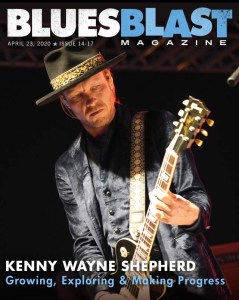
April 23 issue

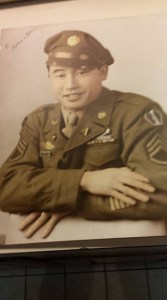
 9066, which commanded all United States residents of Japanese ancestry to report to “relocation centers,” which were in essence concentration camps. The camps were located in Arizona, Arkansas, California, Idaho, Utah and Wyoming. By all accounts life in the camps was no picnic; I remember my mom and aunts talking about the sand blowing in through cracks in the walls and covering everything while they slept (snow, in the winter). You were only allowed to bring what you could physically carry, or lash to your vehicles, so almost everyone lost their homes, their farms, their businesses, their land, and most of their possessions unless they were lucky enough to have neighbors who’d watch over their interests (most did not; this resulted in what was essentially a land-grab by the Anglo Californians). And although many of the Japanese-Americans were understandably bitter and dispirited, the majority of them remained determined to prove that they were good American citizens. In this spirit thousands of young men volunteered to serve in the Army.






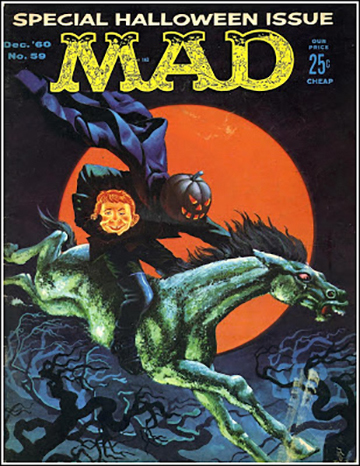
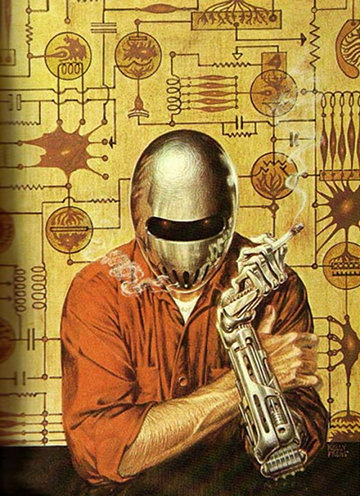
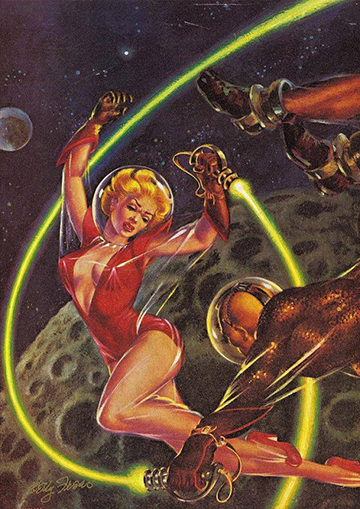
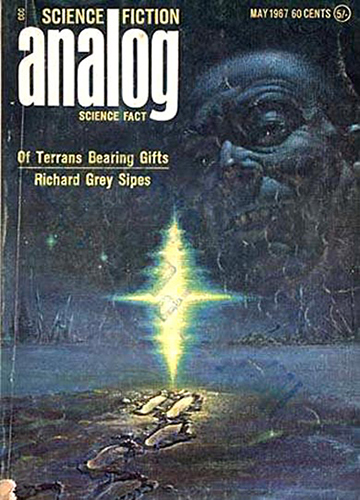 become aware of Freas’ work until I saw his cover for Analog Magazine in May of 1967. I had been a science-fiction reader (hardcore fans almost NEVER call it “sci-fi”) since I was very young; I think Madeleine L’Engle’s A Wrinkle In Time was my first, checked out from my grammar school’s reading room in 1962, followed by *Andre Norton’s Daybreak 2250 A.D.,* purchased from a mail-order book club. I wasn’t into the magazines so much, but some thing about Freas’ cover painting compelled me to buy this one; I have no memory whatsoever of the story that it illustrated.
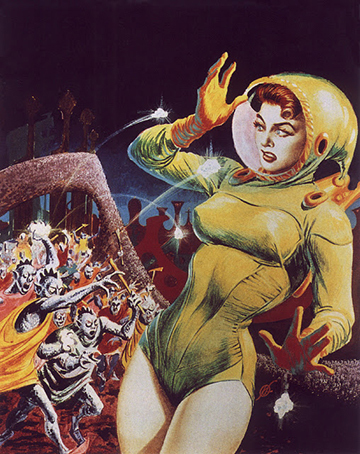 three book covers in 1952, and he started working for Astounding Science Fiction magazine in 1953; Astounding changed its name to Analog and Freas worked for them until 2003. He started working for Mad in 1957, and painted most of their covers until 1962, which would have been right around the time that I started reading the magazine. He also painted hundreds of covers for the paperback publishers Ace, DAW, Signet, Avon, Ballantine and Lancer.
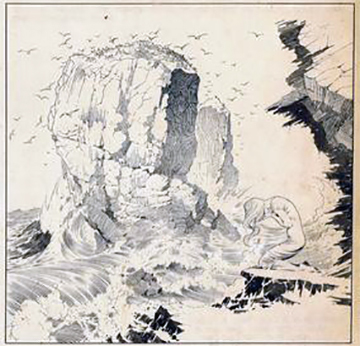
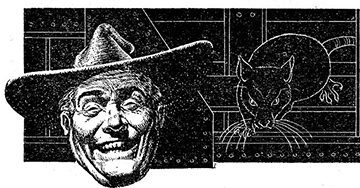 loved, pen and ink on a textured illustration board that used to be called either Ross board or coquille board; sports cartoonists used to use the technique a lot. After the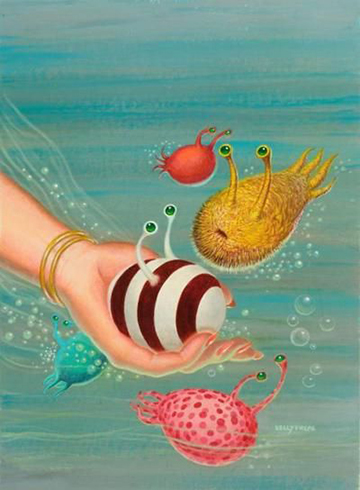
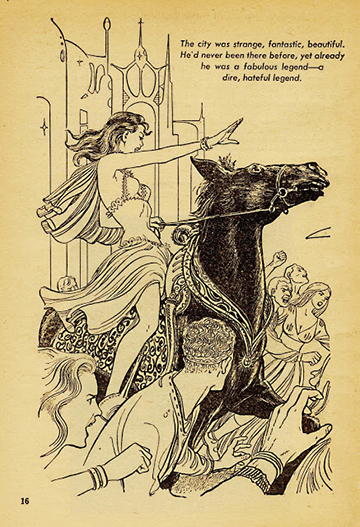
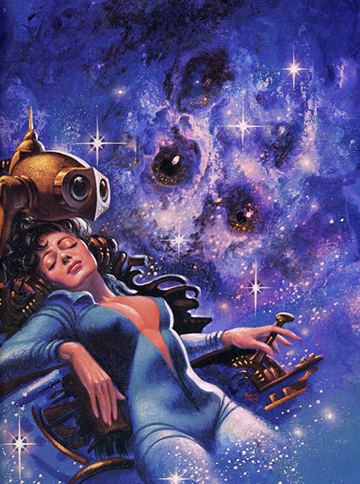
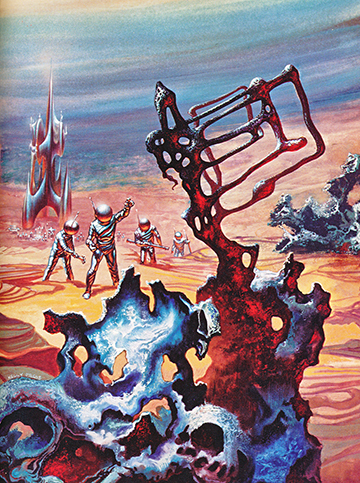

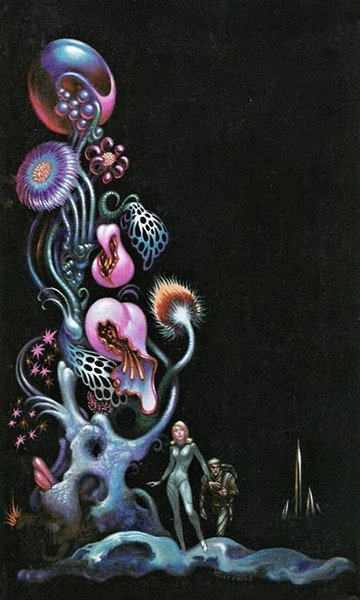
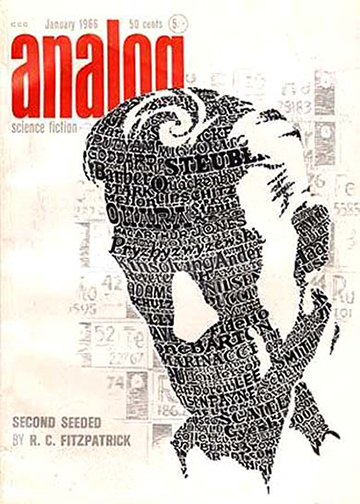
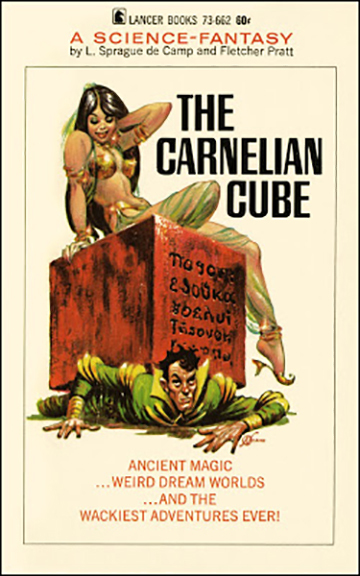

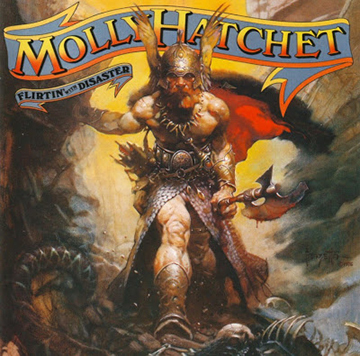
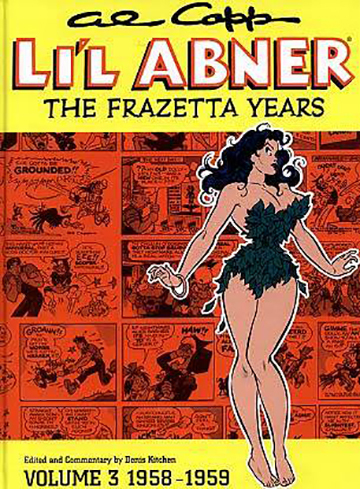 This week’s General Fave is the artist Frank Frazetta. I was going to describe him as “the fantasy artist,” but that’s only what he was best-known for; he also worked in the comics field, advertising, commercial illustration, and science fiction. He was part of the legendary EC Comics stable, and of what was known as the Fleagles, a loose-knit crew of young artists who evolved out of the EC stable to work on Mad Magazine. He drew what’s known in the comics world as ”funny animal” stories, as well as westerns, romance and science-fiction (one of his covers for the Buck Rogers comic book is iconic, much as I hate to use that word, but it applies); he was Al Capp’s assistant for 9 years, drawing mostly the sexy women in the Lil’ Abner comic strip. He also occasionally assisted on the Playboy comic feature Little Annie Fanny, mostly drawing Annie (Frazetta’s women were scandalously sexy; he always claimed that his wife Ellie was his principal model).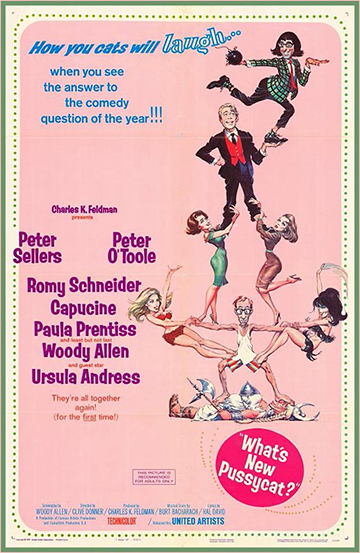
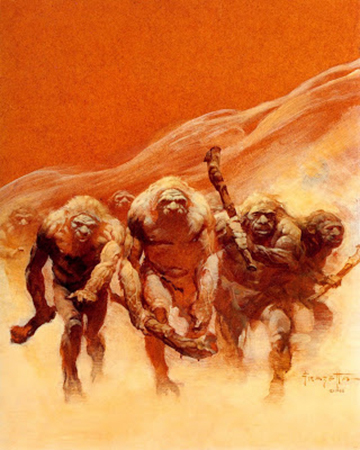
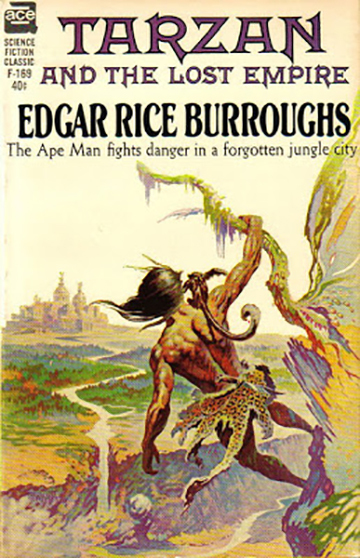 The work that catapulted him to pop-culture fame and recognition was probably the paperback cover work he did in the 60’s and 70’s, for Ace books’ Edgar Rice Burroughs editions (Tarzan, John Carter, etc.) and the Lancer books Conan series.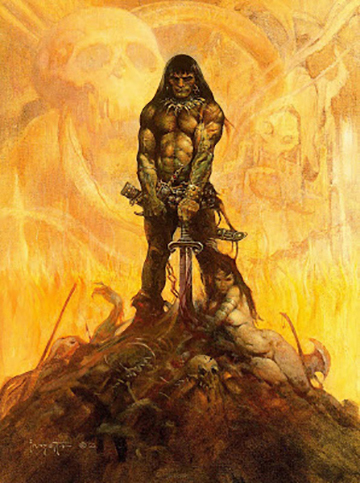
 Dumbfounding Stories