Archive | pop culture RSS feed for this section

“Dance Till Morning Light”

11 Dec

Just finished mixing the song below (“Dance Till Morning Light”). The lyrics are underneath the sound Icon, and a few details about the recording are under them.

DANCE TILL MORNING LIGHT                              

WELL, YOU WALK THROUGH THE NIGHT

YOU FEEL ALLRIGHT

THOUGH NOTHING IS REALLY REAL

YOU GET AROUND YOU’RE GETTING DOWN

YOU’RE SO HIGH YOU HARDLY FEEL

YOU BEEN UP AND DOWN THE STRIP

YOU KNOW THE TRIP

ALL ONE BIG HAPPY CROWD

YEAH YOU’RE LOOKING FOR LOVE

BUT CAN’T TALK ABOVE

THE MUSIC WE PLAY SO LOUD

CHORUS:

SO JUST DANCE, CHILDREN, DANCE                                       

THIS SOFT ELECTRIC NIGHT

DANCE, DANCE TILL MORNING LIGHT

YEAH, YOUR LOCAL ROCK STARS

AND OWNERS OF THE BARS

LOVE TO SEE YOU OUT TONIGHT

GO ON FEED YOUR HEAD, KNOCK YOURSELF DEAD

YOUR MONEY’S GOOD HERE IT’S ALLRIGHT

ACROSS THE ROOM,

THROUGH THE GLOOM

SOMEBODY CATCHES YOUR EYE

SO YOU WALK THAT WAY

WHAT CAN YOU SAY?

YOU’RE BOTH REAL HIGH

CHORUS

I’m playing guitar and singing; my wife, Dorothy plays bass and flute. We recorded those tracks on Garageband and then transferred them to Protools at Evanston’s The Cave Recording, where Andrew MacCrimmon added  drums, recorded by Robert Marshall, who also mixed and mastered the recording.

Should you feel curious how and when I came to write the tune you can click on: https://dumbfoundingstories.com/2014/08/19/dance-till-morning-light/?iframe=true&theme_preview=true. That post contains said info and video of me singing the song accompanied by acoustic guitar.

He Flies package v4.2.indd

“Dance Till Morning Light” is on the album He Flies

Hash’s Faves: “I Wish”

10 Dec

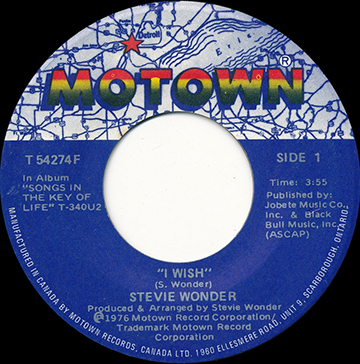
i_wishThis week’s pick is Stevie Wonder’s “I Wish.”It was released as a single in 1976, and then included on the album Songs In The Key Of Life in the same year. The musicians are Nathan Watts, bass; Hank Redd, alto saxophone; Raymond Maldonado and Steve Madaio, trumpet; Trevor Laurence, tenor saxophone; trumpet; and Stevie on vocals, Fender Rhodes, ARP 2600 Synthesizer, and drums.

I played my first Christmas music gig of the year Friday and during the course of the job realized that this is really a Christmas song. Since it’s also one of my favorites and a Sueños staple, we played it, and no one objected, so jobbers, here’s your hip Christmas alternative.

The groove on this song is just the stankiest funk imaginable, driven by Watts’ bass line, which is a line that every bassist should know. It’s doubled by Stevie on synth, but he gives Watts the freedom to play some nasty fills on the vamp-out; after one of them Stevie absolutely cackles with glee. As a jobbing aside, here’s a little story from the trenches. This song is in High Society’s book, but it’s always been in the wrong key, I guess because the original key was too high for an earlier version of the band’s vocalists to handle. I hate it, because I only play a 4-string bass, and the bass line is not only impossible to play a half-step lower but it sounds stupid. Anyway, we were playing it one night with a female vocalist who was auditioning for the band. She evidently had a really weird sense of perfect pitch, because she sang it in the original key, completely ignoring us. The rhythm section made the switch somewhere in the first verse (with me thanking the Dark Gods of Jobbing,) but when the horns came in half of them hadn’t gotten the memo, so it was kind of our “Skies Of America” version of the song (look it up).

As another aside, I attended Senn high school on Chicago’s north side; it was one of the first Chicago schools to bus students in from across the city, including many black students from the south and west sides. It made for some bad moments: Senn was notable for riots in the schoolyard and fights in the halls, and the city eventually had to provide police escorts to get the black students to and from the el stop safely (you can read an account of this in the book The Old Neighborhood by Bill Hillmann, a former juvenile delinquent from my ‘hood). Bless her heart, my mother used to drive to school and fill up the car with a bunch of students who I had become friends with and drive them all the way home to the south side, which we were familiar with because when the Japanese first came to Chicago from California, out of the relocation centers, that’s where they settled, and our family dentist still had an office at 63rd and Jeffrey. Anyway, one of the first black kids I met at Senn was a guy named Larry Brown, who always claimed to be Stevie’s cousin. Stevie still hadn’t quite crossed over to massive mainstream popularity yet so most of us north siders didn’t even really know who he was talking about, but I do remember Larry brought a single in and showed us the songwriting credits, which read Stevland Morris, and for some reason that made it believable to all of us. I don’t know why this story has stuck in my brain the last 50 years.

You can listen to it here:
https://www.youtube.com/watch?v=hYKYka-PNt0

This post is reprinted from News From The Trenches, a weekly newsletter of commentary from the viewpoint of a working musician published by Chicago bassist Steve Hashimoto. If you’d like to start receiving it, just let him know by emailing him at steven.hashimoto@sbcglobal.net.

163984_190498084309709_7503578_n

Steve Hashimoto

Zombies Stink (&Vampires Suck)

17 Nov

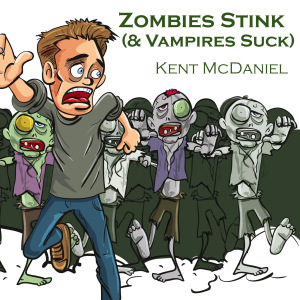
OK, I’ll state right now that I’ve enjoyed more than my share of both zombie and vampire tales. Still, I’m gonna go out on a limb and say that I think maybe, just maybe, zombies and vampires have been have been overused for several years now–in books, movies, TV, and comics. One day it occurred to me that both statements in the title up there could be seen as literally and figuratively true. Before you know it, some lyrics poking fun at the zombie/vampire glut had flowed from the old pen. Eventually I got around to putting them to music–a roots rock/rockabilly song emerged–and even more eventually to recording the song. Clicking on the icon below plays the recording of the song, and the lyrics are below the icon.

Zombies Stink and Vampires Suck

Cruisin’ long in my hybrid ride
NPR on the air inside
Terry Gross had an author on
Who had just written The Zombie Dawn
Got news for you hacks out to make a buck
Zombies stink and vampires suck

Zombies stink and vampires suck
I don’t care how you jive and shuck
I bet you actually had enough
Vampires and zombies and all their stuff
It makes no sense, I don’t care what’s been said
That zombies eat brains when they’re all dead.

And what’s so great ‘bout slurping up blood?
Your average vamp’s a stone cold dud
Sleepin’ in coffins don’t look like fun
Or always hidin’ out from the sun
All these sullen, sultry undead
‘bout to drive me outta my head

Zombies shufflin’ on down the street
Are lame and tired and let me repeat
This world needs another vampire tale
Like we need more junk in the mail
If you’re lookin’ for fans you’re flat outta luck
Cause Zombies stink and vampires suck

I played & recorded all the tracks on Garage Band, except for the drums, which Robert Marshall played & recorded at The Cave Recording in Evanston, Illinois, where  he also mixed and mastered the song.

 “Zombies Stink (and Vampires Suck)” is gonna be on the forthcoming album, He Flies. 

Hash’s Faves: “Epitaph”

14 Nov

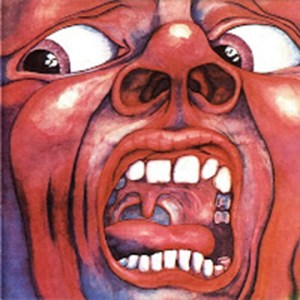
in-the-court-of-the-crimson-kingThis week’s pick is a dark epic by King Crimson, from the 1968 album In The Court Of The Crimson King; it’s the song ”Epitaph,” written by the whole band, with lyrics by Peter Sinfield. The band was Robert Fripp, guitars; Greg Lake, bass and vocals; Ian McDonald, Mellotron, piano, harpsichord, organ, flutes, clarinet and bass clarinet; and Michael Giles, drums, percussion and tympani.

I’ve always loved this song (and to be honest, the version in this video seems slightly different than the original album version). I’m unsure what the division of labor regarding the composition was, but taking a wild guess, I’d say the Mellotron parts were  McDonald’s and the gorgeous melody Lake’s, since melody never struck me as one of Fripp’s strong suits. So I assume the production is probably mostly Fripp.

In a recent interview in Bass Player magazine, Lake said he’d never played bass before signing on with Crimson, and that Giles yelled at him for a year. I’ve always said (ask my students) that British rhythm sections differed from American ones in that the kick drum and bass aren’t as married together as they were over here. I put that down to two things; the Brits didn’t grow up listening to Motown and Stax/Volt, and many of the English musicians had more of a classical music background, whether from singing in choirs or just the European educational system. So, with Lake also coming from a guitarist’s perspective, he was, I guess, a little busy, and Giles would whack his snare and yell, “Oi, mate, y’hear that? When I’m playing the snare, you don’t play!” I must also assume that Fripp, notoriously opinionated and somewhat of a control freak, had a dog in the fight too. So eventually Lake not only became an economical bassist, but a melodic one (I think his comment was, “McCartney’s the General, ain’t he?”). In his own solo project Lake prefers to play guitar, and when asked what he looks for in a bassist, he said, “Well, me, to be honest.”

For a song to represent my feelings this week, my first choice was The Mothers Of Invention’s “Trouble Every Day,”but I’ve already used that. My second choice was Gil Scott-Heron’s “The Revolution Will Not Be Televised,” but I’ve used that too. Then “Epitaph” came to me in a blinding flash, as if God herself beamed it to my brain. I’ve never thought of this as a political song, or even particularly dystopian, but as I ran the lyrics through my mind,it became obvious no other song would do.

You can listen to it here:
https://www.youtube.com/watch?v=NURDpnR-cEg

This post is reprinted from News From The Trenches, a weekly newsletter of commentary from the viewpoint of a working musician published by Chicago bassist Steve Hashimoto. If you’d like to start receiving it, just let him know by emailing him at steven.hashimoto@sbcglobal.net.

163984_190498084309709_7503578_n

Steve Hashimoto


“Something Good” (for Janna & Mike)

5 Nov

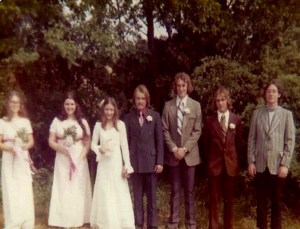
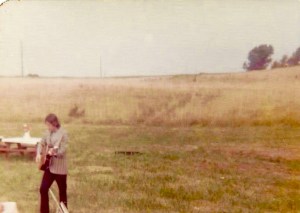
Spring of ’73 my friends Mike & Janna got married and asked me to sing for their wedding. I wrote a song  for it, “Something Good”. It was about them, but I’d just started meditating, and maybe it was about that, too.

Mike was an artist, total comics freak, and explorer of astral planes, Janna his

wedding-pis-3

ancient photo

life-line, anchor. Their wedding was outside Metropolis in a meadow, at the bottom of a hill. In my memory the sky’s cerulean & the grass emerald. Mike walked down one side of the hill with his friends, Janna down the other with hers. I was a the bottom with the preacher, singing “Something Good”.

I don’t want to brag,  but Mike and Janna are still happily married.

A recording of “Something Good” is below, it’s lyrics under that.


Something Good

Something’s got you singing

a new song every day

Something’s got you smiling

as you walk along your way

Chorus:

Something good has come into your life

something fair & beautiful to see

something good has come today

Now you don’t know why

but you’re laughing

& your fears have flown away

you can’t fight the feeling

that’s filling up your hearts, and

(Chorus)

Now your true love takes your hand

at your side is your best friend

All around loved ones stand

Your eyes fall on the sunlight

that dances cross the clouds

A river flows inside you, its current deep & strong

(Chorus)


The song’s on my About Time CD.


wedding-pis-5

also ancient


Hash Fave’s: Some Westlake Stuff

2 Sep

“Hash’s Faves” generally are musical but this one is literary.

The late Donald E. Westlake is my all-time favorite author. If I can write at all it’s by following his example.

donald_westlake

Donald Westlake

Although I don’t recall seeing any specifics in any biographies of him, I’m guessing that he has some sort of musical background, as there are many small but telling tidbits, descriptions of musicians, musician characters, etc., in much of his writing. I also guess that he has some sort of connection to Illinois (I do know that he ghost-wrote a lot of soft-porn potboilers for a publisher in Evanston in the early 60’s) as there are frequent mentions of cities in Illinois. And I’m guessing he has a theatrical background, as many of his main characters are actors.

Within the last weeks I’ve read his penultimate book, Memory, and one of his earliest, The Cutie. It’s been interesting. Just to give some context, Westlake’s earliest works were kind of all over the place – science fiction, hard-boiled detective and crime stuff, and humor. He was prolific, utilizing more than a dozen pseudonyms, and at one point churning out a book every couple of days. One of his most famous inventions was a character named Parker, a nihilistic criminal mastermind – pitiless, brutal, vicious and brilliant.   Westlake wrote a series of Parker novels under the name Richard Stark, and over the years they have become cult classics, and have been the inspiration for some movies and graphic novels. But at some point Westlake discovered an undercurrent of wild humor emerging in his writing, almost beyond his control, a voice that didn’t fit Parker’s character at all, so he started a new series of books featuring another criminal mastermind named John Archibald Dortmunder. Dortmunder was far from brutal, and the books are very funny.

Westlake wrote in this humorous vein for many years, and a lot of his funny books were made into movies, with varying degrees of success, but his last couple of books got pretty dark. Memory is about an actor who loses his memory, and is a melancholy exploration of what the “self” is. At one point the protagonist, Paul Cole, visits his first acting teacher in an attempt to fill in some of the gaps in his knowledge of his self. The teacher’s reaction to seeing Cole, in his present confused state, is extremely dark, but I thought this monologue was germane not only to those in the theatrical profession but to any artist:

“Every once in a while,” he called, walking around and around, “through that door over there comes an actor. Every once in a while, every once in a great great while. Not one of these pale idiots who wants to be an actor, can you think of anything more foolish? It’s like wanting to fly, isn’t it, you can or you can’t and that’s an end to it, wanting has nothing to do with it. You can even want not to fly, but if you’ve got the wings you’ll fly, one way or another, and wanting has nothing to do with that.”

He stopped again. He was now very near the door, standing facing it with his hands on his hips in a belligerent way. He talked now at the door, but loudly enough for Cole to hear him, with a slight echo in the words. “These young fools come in here with their feeble desires and chip away at my life! Like woodpeckers. What sort of a useless stupid appendix of the emotions is desire, what has desire ever done for anybody but turn him into an embarrassing fool? How can you want to be an actor? You are or you aren’t, and ninety-nine percent of them coming through the door are not. But then there’s the one who is.”

Kirk’s voice had lowered on the last sentence, so that Cole could barely hear him, and now he turned back and came walking straight toward the platform, looking directly at Cole now as he spoke: “That’s what I live for, Paul, that’s the reason for my existence. I sit here and wait and wait and wait, and every once in a while an actor comes through that door back there, a boy or a girl who’s been an actor from the minute he was born, whether he knew it or not. They come to me, and I give them the rudiments, I give them the terms for what they already know how to do, and I give them freely from my own poor store of contacts in the theatrical world, and I watch them discover themselves, discover their own powers and the gulf that yawns between them and the poor fools sitting around them in class…

Now, I don’t necessarily agree with the bleakness of this assessment, but I do agree with the essence of it, that some people just aren’t cut out to be whatever– musicians, painters, poets, actors, photographers, sculptors or writers. One may desire to be, and I would certainly encourage anyone who has such a desire to pursue it, if only for one’s own fulfillment. But very few people can become Charlie Parkers or Marlon Brandos or Picassos. With hard work and dedication, though, one can become proficient enough as a craftsman to produce work that he (or she) can be proud of, and can work in their chosen field. That, I guess, is what I am. I ain’t Jaco Pastorious or Herb Lubalin or Westlake; I wish I was, but I’m pretty happy with what I’ve got. That doesn’t mean I’m satisfied, by any means, but neither am I ashamed.

As a sidenote, I’ve always been fascinated with the way that Westlake inserts sly little cross-references from previous works into his books, so I was absolutely thrilled to see that he used an address on Grove Street in Greenwich Village in Memory (I read that one first), and an address on Grove Street also pops up in “The Cutie.” Fifty years separated the writing of those books.

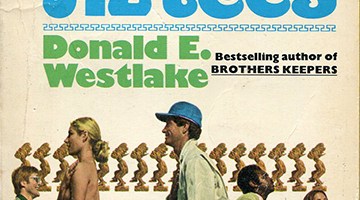
The book that introduced me to Westlake, by the way, and that got me hooked is called Dancing Aztecs; it’s not one of his Dortmunder books but it is very funny, and it is a caper book. Lise Dirks turned me on to the book and I will forever be indebted to her.


Dancing_Aztecs

Steve Hashimoto

This post is reprinted from News From The Trenches, a weekly newsletter of commentary from the viewpoint of a working musician published by Chicago bassist Steve Hashimoto. If you’d like to start receiving it, just let him know by emailing him at steven.hashimoto@sbcglobal.net.
163984_190498084309709_7503578_n

Steve Hashimoto


Hash’s Faves: “Just You, Just Me”

6 Aug

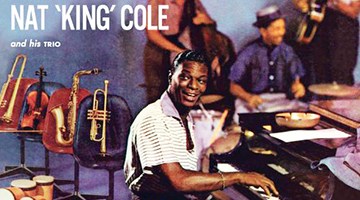
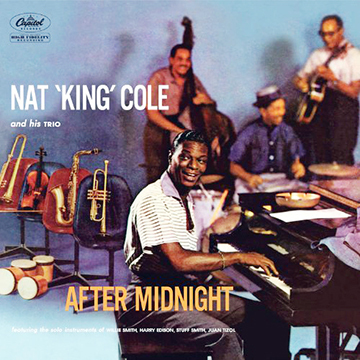
After_MidnightThis week’s pick is the jazz standard ”Just You, Just Me,” from Nat “King” Cole’s After Midnight album. The song is by Jesse Greer and Raymond Klages, from a 1929 movie called Marianne. Cole’s album featured his trio, with Cole singing and playing piano, guitarist John Collins and bassist Charlie Harris. On this song, they’re joined by Lee Young, Lester’s brother, on drums, and Willie Smith on alto saxophone.

This was another album that was part of my introduction to jazz. I don’t know why I bought it; it was probably in a cutout bin somewhere. But I loved every cut, and still do (the CD re-release has several bonus tracks that were not on the original LP). Cole’s voice, of course, was familiar to me, most likely from his rendition of Mel Torme’s “The Christmas Song,” but his piano playing was a revelation. As part of my jazz self-education I had been reading books (Ira Gitler, Martin Williams, Whitney Balliet, etc.) and so I knew, intellectually, that he was considered a pivotal player, but even to my unsophisticated ears his lines were elegant, sophisticated, and above all, swinging. And as I was still a guitarist at that time, Collins’ playing was equally revelatory, and still is. I think he’s an underrated and under-recognized player, and his playing contributed much to what I still think of as proper jazz guitar slinging.

The album’s concept was also pretty cool – the trio accompanied by special guests on every track. Besides Smith, Harry “Sweets” Edison, Juan Tizol, Stuff Smith and Jack “Mr. Bongoes” Costanza all appeared, so the album also served as a pretty good introduction to the history of jazz styles, from swing to bebop and Latin-jazz.

This particular tune has a swinging intro (the arranging on the record is superb), and all of the front-line instruments get a chance to blow. As a sidebar, the song is the basis for Thelonious Monk’s “Evidence.” Monk’s tune was originally titled ”Justice,” (Justice = Just Us – Just You, Just Me), then retitled ”We Named It Justice,” then “Evidence.” John Kaplan pulled my coat to that way back in the Famous Pizza Gig days; thanks, John.

You can listen to it here:

https://www.youtube.com/watch?v=UGl0av2Yly8

–Steve Hashimoto

This post is reprinted from News From The Trenches, a weekly newsletter of commentary from the viewpoint of a working musician published by Chicago bassist Steve Hashimoto. If you’d like to start receiving it, just let him know by emailing him at steven.hashimoto@sbcglobal.net.

163984_190498084309709_7503578_n

Steve Hashimoto


Hash’s Faves: “Forever in My Life”

31 Jul

prince_sign_o_timesThis week’s pick is a funky love song by Prince, “Forever In My Life.” It’s originally from his 1987 album Sign O’ The Times.The album was a quasi concert film, and featured Prince’s band at the time, Prince on lead vocals and guitar (and, one assumes, drums, keyboards and bass); Wendy Melvoin, guitar, percussion and vocals; Lisa Coleman, keyboards, sitar, flute and vocals; Sheila E, drums, percussion and vocals; Dr. Fink, keyboards; Miko Weaver, guitar; Brown Mark, bass; Bobby Z,drums; Eric Leeds, saxophone; Atlanta Bliss, trumpet; and Sheena Easton, Susannah Melvoin and Jill Jones, vocals. The very different, expanded live version here is from the movie Sign O’ The Times and features a slightly different band, adding keyboardist/vocalist Boni Boyer (in a star turn), bassist Levi Seacer and dancer Cat Glover.
I slightly favor the album version; it’s more economical and it’s easier to hear the brilliant background vocal arrangement in the second verse, which, in my opinion, should become standard repertoire for college vocal ensembles attempting to be hip. But the live version has plenty of high points, including the aforementioned Boni Boyer feature (“It’s your house, Boni,” Prince exhorts), the chanted vocals by the audience in the front and back of the song (surely written by and instigated by Prince), the long group vocal vamp out (“Back up offa the mic’s, chil’un!”) and the passionate ad libs in the outro by Prince. It’s all stagecraft at the highest level – the costuming of the band, the band choreography, the preaching. The groove is elegantly simple and supremely funky, but at the heart of everything is a gorgeous melody and lyrics; this is a SONG. The lyrics, perhaps, are slightly disingenuous, given Prince’s reputation as a mack daddy, but who am I to say?

You can listen to the CD version here:
http://whomakesmelaugh.wrzuta.pl/audio/9D5KqJjXTkM/princeforever_in_my_life

Steve Hashimoto

This post is reprinted from News From The Trenches, a weekly newsletter of commentary from the viewpoint of a working musician published by Chicago bassist Steve Hashimoto. If you’d like to start receiving it, just let him know by emailing him at steven.hashimoto@sbcglobal.net

163984_190498084309709_7503578_n

Steve Hashimoto

Hash’s Faves: “Seven Come Eleven”

10 Jul

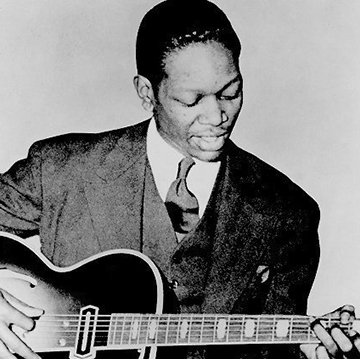
Charlie-Christian-solosThis week’s pick is one of the tunes that was on that reel-to-reel bootleg that introduced me to jazz; “Seven Come Eleven,” by Charlie Christian, with the Benny Goodman Sextet, Benny on clarinet, Christian on guitar, Lionel Hampton on vibes, Fletcher Henderson on piano, Artie Bernstein on bass and Nick Fatool on drums.
Even at this late date I think it’s impossible to overstate Christian’s impact. He was one of those rare players that completely revolutionized his instrument, like Louis Armstrong, Jimmy Blanton, Charlie Parker, Max Roach, Bill Evans, John Coltrane, Jaco Pastorius or Buddy Emmons. Certainly there had been guitarists who played single-note lines, and Christian wasn’t the first to amplify his guitar, but Charlie’s melodic and rhythmic vocabulary was unprecedented. This may be a bit of a stretch, but I hear similarities between him and Ornette Coleman; both came out of the Southwest, and there’s a certain stringent, desert-like aridity to their lines.

I also think that at this late date in jazz history it’s easy to forget what a great player Goodman was. I think he suffers from what I think of as the Miles Davis syndrome, in that people (well, us musicians, anyway) automatically think of his terrible reputation as a person and turn our minds off when we hear his playing. But, you know, the cat could play, and another extremely important thing to remember is that, even though he sometimes treated the black members of his bands badly he was among the first white bandleaders to hire black musicians, and he was certainly the leader with the highest visibility (Jimmy Durante was actually the first).

Producer John Hammond, one of music’s great talent scouts, learned about Christian through the pianist Mary Lou Williams, and recommended him to Goodman. His tenure with Goodman thrust him into the spotlight; his recordings with Goodman have been the Holy Grail for jazz guitarists since their creation. Sometime in the early 1940’s he started making the jam sessions at Minton’s Playhouse in New York city, and he’s credited as being one of the inventors of bebop; indeed, the term itself is thought to be Christian’s description of his playing style.

He died at the age of 25 from tuberculosis. His influence extends beyond the world of jazz; blues, rock, rockabilly, country and bluegrass guitarists all owe Christian a debt.

You can listen to it here:

This post is reprinted from News From The Trenches, a weekly newsletter of commentary from the viewpoint of a working musician published by Chicago bassist Steve Hashimoto. If you’d like to start receiving it, just let him know by emailing him at steven.hashimoto@sbcglobal.net.

163984_190498084309709_7503578_n

Steve Hashimoto


“Cards on the Table”

15 May

I’m posting audio here of “Cards on the Table”, which I just recorded with a little help from my friends. The lyrics are below the song and some details about the recording below them:


                   CARDS ON THE TABLE

If I HAD A DOLLAR FOR EVERY FOOL I’VE KNOWN

EVERY LYIN’, CHEATIN’, BRAIN-DEAD BUMMER

WHO EVER TRIED TO RIP ME OFF

I WOULD NEVER HAVE TO WORK ANOTHER DAY

THE REST OF MY NATURAL LIFE


                    CHORUS:

PUT YOUR CARDS ON THE TABLE

LAY DOWN YOUR MONEY

PUT YOUR CARDS ON THE TABLE

WHAT’VE YOU GOT?


PEOPLE ALWAYS TALKIN’ BOUT

WHAT THEY’RE GONNA DO

GONNA MAKE IT REAL BIG, TAKE YOU WITH ‘EM

TO THE PROMISED LAND REAL SOON

THEY GOT A SURE FIRE DEAL COMIN’ THROUGH

AND THEY WANNA CUT YOU IN


                         CHORUS


ONCE I CHASED WHAT I WANTED STRAIGHT

DOWN THE OPEN ROAD

I GOT HIT HARD, KNOCKED DOWN, GOT UP & MOVED ON

BOTH EYES WIDE OPENED UP

SO IF YOU GOT A DEAL TO RUN BY ME

THERE’S ONE THING THAT YOU GOTTA DO


                             CHORUS


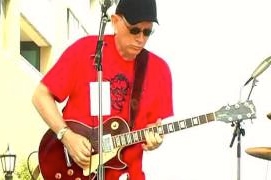
The guitars, bass and lead vocals were recorded in Garage Band on my computer and then transferred to Pro Tools at The Cave Recording in Evanston. There Robert Marshall recorded the drums, harmony vocal, and saxello parts, by Andy Mac Crimmon, Micki Broeker, and John Temmerman respectively. And a great job they all did.

The lyrics pretty much speak for themselves, and surprised me when they came out. Sometimes you don’t know what you feel till you say it.


ME