Archive | pop culture RSS feed for this section

Hash’s Faves (“Orleans” by David Crosby)

28 Jul

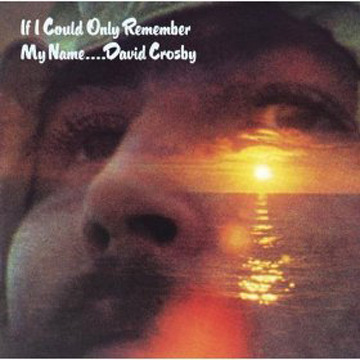
If_I_Could_Only_RememberThis week’s fave is “Orleans”, a traditional French song rendered by David Crosby on his 1971 album ”If I Could Only Remember My Name.” Although a veritable who’s who of Bay Area musicians (Jerry Garcia, Phil Lesh, Mickey Hart, Bill Kreutzman, Jack Casady, Paul Kantner, Grace Slick, Jorma Kaukonen, Joni Mitchell, Graham Nash, Neil Young, Gregg Rolie, Michael Shrieve and David Freiberg) appear on the record, I believe this track is all Crosby, overdubbing multiple (gorgeous) vocals.

I’ve wanted to know what this song is about for years, but thanks to the internet, I think it’s merely a listing of church or parish or maybe neighborhood names in Paris.

I always loved this record, from the day it came out. Critics were not kind at the time, but revisionist rock history now places it high amongst influential albums from the time. One thing that really interested me about the record was the way that the Bay Area musicians formed ad-hoc groups like this and performed on each other’s records, in much the same way that jazz musicians do. Many of the players on Crosby’s album also appear on the record ”Blows Against The Empire,” credited to Jefferson Starship but really a Paul Kantner solo project. There was always a great deal of movement between Crosby Stills Nash and Young, Jefferson Airplane, The Dead, Quicksilver Messenger Service and Santana, as well as singers like Joni Mitchell and Mama Cass Elliott.

I’ve read that some of this record reflects the pain the Crosby was suffering due to his girlfriend Christine Hinton’s tragic death in an auto accident; the song ”Traction In The Rain” is surely about that. Much of the record (and there’s an alternate version on YouTube that I just discovered) is filled with noodling and meandering jams, but the songs are strong, because Crosby always had a gift for melody. And for good or for ill, he always wrote lyrics with his heart on his sleeve; a lot of his lyrics may be, as Neil Young once said, hippie dreams, but he believed fully in them (even though he was a gun-totin’ coke head).

You can listen to it here: https://www.youtube.com/watch?v=Mk8PSTtOsKk

This post is reprinted from News From The Trenches, a weekly newsletter of commentary from the viewpoint of a working musician published by Chicago bassist Steve Hashimoto. If you’d like to start receiving it, just let him know by emailing him at steven.hashimoto@sbcglobal.net.

Hash’s Faves (Johnny Cash’s “Folsom Prison”}

19 Jul

Hash’s Faves

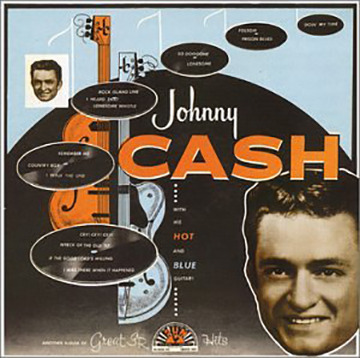
Johnny_Cash-2This week’s fave is some old-school country music, from back before country music became rock with cowboy hats. It’s the Johnny Cash classic ”Folsom Prison Blues.”This is the original version, from Cash’s 1957 debut album ”Johnny Cash With His Hot And Blue Guitar”; a “live” version, actually recorded at Folsom,
is also accepted as an iconic and official version. The backstory there is that the cheers of the prisoners reacting to the line “But I shot a man in Reno just to watch him die” was added in post-production; the prisoners were careful not to cheer any lines referring to lawlessness lest they invite retaliation from the guards, who were probably a little nervous about the show anyway.

I assume that the players on the session are Cash’s long-standing band (they also played on the live version), guitarist Luther Perkins, bassist Marshall Grant and drummer W.S. Holland. The record was the first LP issued by Sun Records; the legendary Sam Phillips produced, and I assume it was recorded at the Sun Studios in Memphis, Tennessee.

Cash wrote the song while stationed with the U.S. Air Force in West Germany, in the 1950’s. He had seen a movie ”Inside The Walls Of Folsom Prison” (a dramatic film, not a documentary; he came up with “I shot a man in Reno” line and “borrowed” a melody and some of the lyrics from a song by Gordon Jenkins, “Crescent City Blues,” which in turn was based on a song by blues singer/pianist Little Brother Montgomery. The Jenkins song was on a “concept album” called ”Seven Dreams,” which was released in 1953. Jenkins is the author of one of the most beautiful jazz ballads, ”Goodbye,” which was Benny Goodman’s sign-off tune for his radio show, and also arranged Frank Sinatra’s “September Of My Years” album. The singer on Jenkins’ “Crescent City Blues” was Beverly Mahr. Jenkins sued Cash in the 70’s and was paid a settlement of $75,000; it’s unclear if Montgomery was ever paid any money (Montgomery spent a lot of time here in Chicago and I wonder if any of you mugs out there knows anything about this?).

The song became one of Cash’s signature tunes, and helped forge his image as an outlaw, although, unlike Merle Haggard, he was never in prison. He did spend a lot of his early years living a wild life on the margins of the law, along with room-mate Waylon Jennings. He was a notorious drug user, but finally cleaned himself up in the 1990’s.

Cash was an activist; he continued to do prison concerts throughout his career, and was an early fighter for Native American rights – he recorded the song ”The Ballad Of Ira Hayes” in 1964. Hayes was one of the U.S. Marines who raised the American flag on Mt. Suribachi on Iwo Jima; he was a member of the Pima tribe, and on his return to the United States he descended into alcoholism and died of exposure in 1955. The Clint Eastwood film ”Flags Of Our Fathers” is a moving account of his story. Cash also shook up country music circles when he recorded ”Girl From The North Country” with Bob Dylan in 1969 (it became the leadoff track on Dylan’s album ”Nashville Skyline,” which also shook up the rock world), and his invitation to Dylan to appear on his television show arguably opened the gates to all subsequent country/rock/folk collaborations.

Cash died in 2003, after experiencing a career rejuvenation at the hands of producer Rick Rubin.

You can listen to it here:
http://www.tekstowo.pl/piosenka,johnny_cash,folsom_prison_blues.html

This post is reprinted from News From The Trenches, a weekly newsletter of commentary from the viewpoint of a working musician published by Chicago bassist Steve Hashimoto. If you’d like to start receiving it, just let him know by emailing him at steven.hashimoto@sbcglobal.net.

On the Cusp of Dark Fantasy & Magic Realism

10 May

Dark Fire Fiction just posted “Howard Vancil’s Dilemma,” a short story whose genre would fit the  description up there. It’s at http://darkfire.t15.org, and the site is free.


dark fire

Dark Fire Fiction


Stagger Lee

14 Apr

thI’m posting an audio recording we made some time ago of “Stagger Lee”, one of my favorite tunes. We thought the recording had been lost a few years back in a computer crash, but Robert Marshall at The Cave Recording, where we recorded it, found a copy last month in their system’s memory . A great surprise, and we’re going to include the song on a new album were working on. If you’d like to hear the recording, just click on the icon below:


There’s also a a video of my wife Dorothy, drummer Alpha Stewart, and I playing the song live: https://dumbfoundingstories.wordpress.com/2015/01/22/stagger-lee-2/.

Outre’ #5

31 Jul


Outre' #5, cover

Outre’ #5, cover

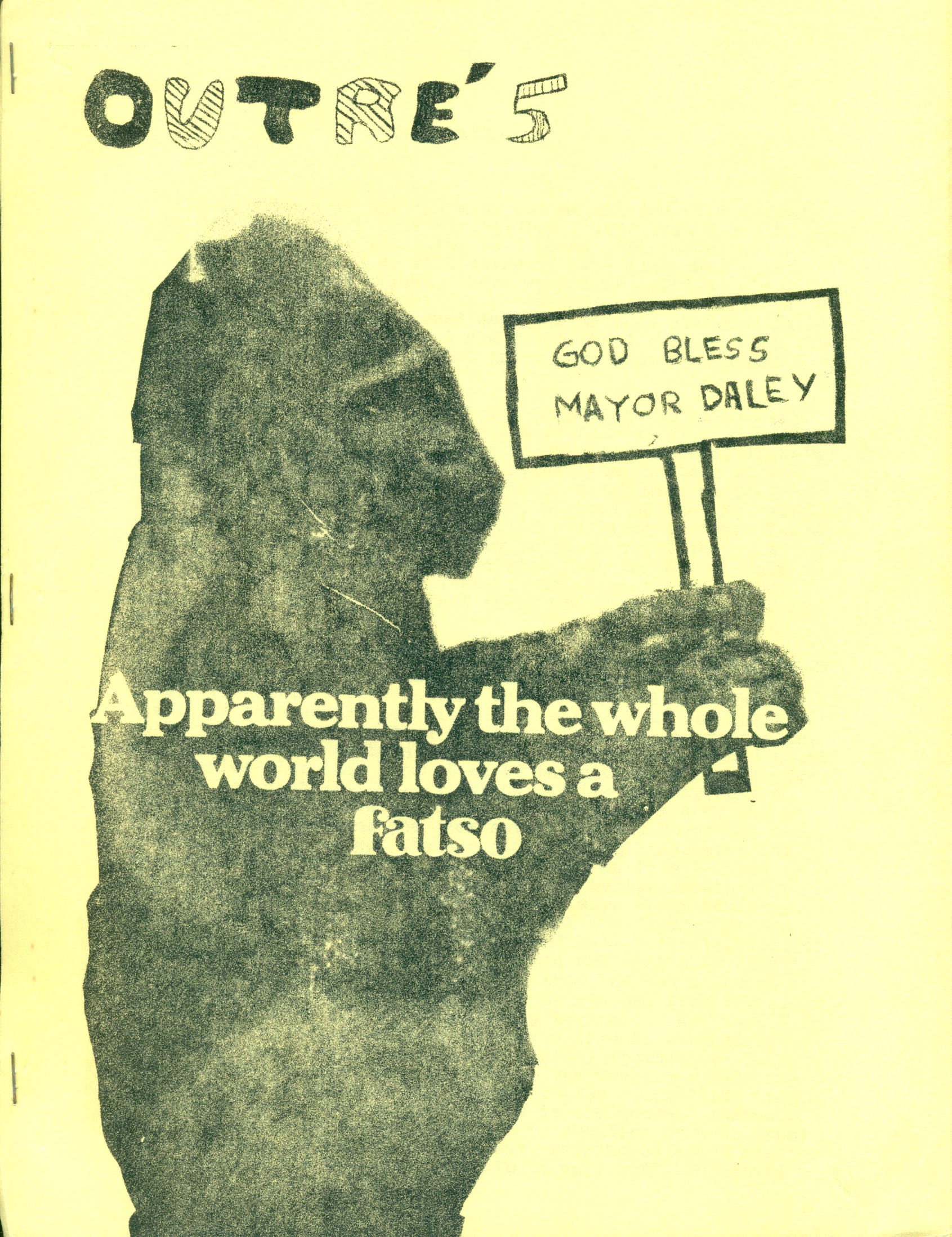
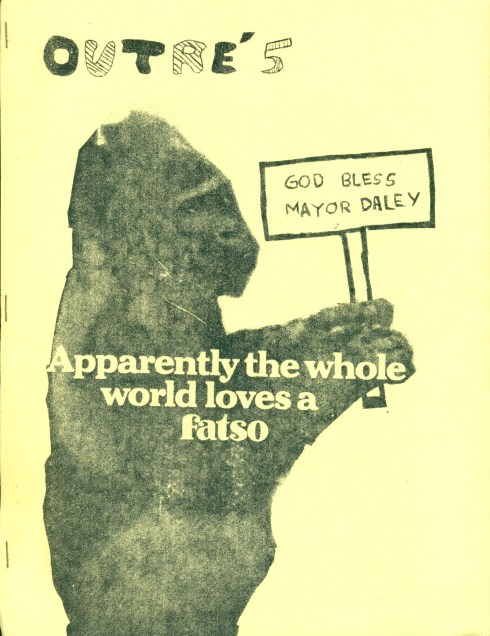
The cover above is  from Outre #5, which ran through mailing 34 of The Southern Fandom Press Alliance (SFPA), circa 1968. Ned Brooks, official archivist of of SFPA, was kind enough to provide it for me, along with the text below from the issue . Science-fiction fanzines then and now came in two general types: genzines and apazines. Genzine is short for general interest fanzine, and genzines tend to feature general interest (to SF fans) articles and reviews. Apazines are printed for amateur press alliances, which in science-fiction fandom were (are) much like paper chat rooms. Most apazines feature a section of natter in the front, in which the editor shares some of what has been going on in his or her life, followed by a section of mailing comments, in which the editor comments on the zines done previously by the other members of the apa. “Talk Talk” below, was the natter section from Outre’ #5, and I reprint it here to give you a sample of apa natter and to remind myself what 1968 was like in southern Illinois. You will perhaps notice that none of the natter involves science-fiction. This is actually pretty typical of apazines.

TALK TALK “

We’ll, I had an outline made out of all the wild things

that happened at SIU this Spring, but I lost it, I don’t

feel like outlining it again, so I guess I’ll forget about

writing about them, By wild things I mean there was a sit-

in on our President’s lawn, there were over 4,000 people

there, there were walk-outs in protest of women’s hours by l,000’s

of girls, and somebody burned down Old Main (a classroom

building)- Well, it books like I did right about all the wild things

at SIU, after all — if not in as much detail as I had planned.

I PICKED UP A HITCH HIKER THE OTHER DAY, I’ll usually

pick up a hitch-hiker if he’s got a suitcase: I figure that a

guy must be traveling as opposed to just on the road, if he’s

carrying a suitcase. Anyhow, the first thing he told me was

that he had Just gotten out of prison, which made me feel

real secure. Then, a little later, he told me that my hair

was going to get me killed, “People are tired of these

long-haired trouble makers, boy! They‘re gonna start shooting ‘em

down before long!” He then predicted that the 4th of July

would be the start of a full-scale war against long-hairs.

Damn, it’s scary to know that there are people like that around

As a matter of fact, I’ve been having quite a few strange

experiences on the road. Last Sunday a friend and

I left for SIU. Before getting out of Metropolis we had a

flat. We changed it and waited for over an hour for the tire

to be fixed. After getting the tire fixed and starting off again,

we had gone about fifteen miles out of Metropolis when I heard

a flop-flop-flop that brought me to the sickening realization

that we had another flat. I pulled off the highway onto a

country road to change the tire. It was dark, and we had a

little trouble getting the jack set up and put under the car

correctly. Once we got the car Jacked up, we discovered that

my car-tool wouldn’t budge the nuts. So, my friend hiked to

a nearby farmhouse, and came back with a better car-tool.

With it we quickly changed the tire and were ready to leave.

Then I noticed that we had, not one, but TWO flats. We decided

to walk over to the farmhouse and call a service station.

Of course, when we got there, it turned out that they didn’t

have a phone. However, we were told that the house across

the highway had a phone.

Well, when we reached this house,

the people there turned out to be paranoid. Not that I

blame them for being leery of strangers (freaky strangers, at

that), but they really presented a spectacle. The

wife ran out of sight when we came to the door, and her hus-

band came up to the door and peered out its window with wide

frightened eyes. He wouldn’t let us in the house. Instead,

we had to carry on our conversation by shouting at each other

thru the door, Finally, in this way, we managed to get our problem

across to him and persuaded him to call a filling station for us.

So our second tire was soon repaired, and we were on our

way — but not before finding out why the farmer who had called

the service station was so paranoid. It seems that some

guy had come into the man’s house a couple of months earlier

armed with a shotgun and demanded some

gas for his car. I guess that would have been enough to scare

anyone. But, what is really strange is that the farmer was

somehow able to disarm the stranger and instead of turning

him in to the cops, he pointed the man’s gun at him and said.

“get your gas and leave.” He then held the gun on him as

he filled his tank. And, then as the burglar pulled

off, the farmer threw his gun back in his car. Strange….

One more little twist to this tale: the freaky farmer turned

out to be the uncle of one of my usual riders to SIU. Unfortunately,

this rider wasn’t along on this trip; if he had been

with us, the farmer might have let us in his house.

MISCELLANEOUS TRIVIA DEPARTMENT Restroom walls may be

a hackneyed subject (they have been written on a lot),

but recently the john walls at Morris Library at

SIU have taken an interesting turn. They have become a forum

for racism. Although much of the space is devoted to such unoriginal

entries as “Nigger!”, some interesting dialog has developed.

The following are a few examples:

1. “The Klu Klux Klan is an exclusive fraternity of

high-minded men”

“So are the Black Panthers and Blackstone Rangers.“

2. “It is a medically proven fact that niggers have double

skulls. What does this tell us?”

“That whites will eventually have double skulls. also.”

3. “Go back to Africa, you black apes.”

“My sentiments exactly. Signed. Adolph Hitler.”

The days of white supremacy seem to be over, at least as

far as rest room wall put downs go. Oh, one more restroom

anecdote along the same lines has just occurred to me. In the

dorm that I lived in Fall quarter, the john walls

were covered with writing. The janitor, who was black. was

told to clean it all off. He did his Job well. The walls

were spotless — except for one slogan which he inadvertently

missed: “Wallace Sucks.”

I had a course in Southern history this quarter. I was

struck by the strange names of many of the Southern politicians.

Apparently, a strange name or nickname was necessary

 equipment for a Southern politician in the early 1900’s Here are

a few of the more intriguing names. Cyclone Davis, Stomp

Ashley. Hoke Smith (who unkind newspapers sometimes referred

to as Hoax Myth), James S. Hogg (who must have had a

sadistic sense of humor, as he named his daughter Ima Hogg)

Pitchfork Ben Tillman, and Theodore Bilbo (who was included

for all you Tolkien fans)

And, on that profound note ends this issue’s installment

of Talk Talk.

Om

Om

    Om…

FANDOM. LOVE IT OR LEAVE IT

QUOTES FROM MAYOR DALEY:

On Police Brutality: “Gentlemen, get the thing

Straight once and for all — the policeman isn’t there

to create disorder, the policeman is there to

preserve disorder.”

On Law and Order: “I would assume any (police)

superintendent would issue orders to shoot any arson-

ists on sight.” (April 15, 1968) “There wasn’t any

shoot-to-kill order. That was a fabrication-“

(April 17, 1968)

On the fortunes of politics: “They have vilified

me, they have crucified me; yes, they have even

criticized me.”

On Viet Nam Doves: “Everyone is entitled to his

position, but we need unity as well as division.

Dissent is one thing but division is another.”

(All quotes from –shudder — Time)

Here’s another shot of that cover:
Outre' #5, cover

Outre’ #5, cover

Neil Young’s Living With War

6 Jul

kentmcdanielwrites's avatarkentmcdanielwrites

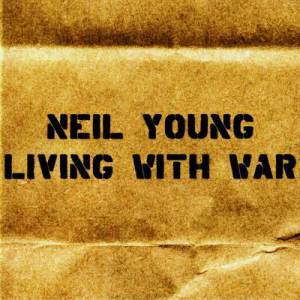
           neil-young-living-with-war-2006-front-cover-43720DO YOU REMEMBER JUST HOW BLEAK THINGS WERE DURING THE BUSH ADMINISTRATION?  (May we never forget.)   Preemptive War, Abu Ghraib, Guantanamo, Secret Prisons, Special Rendition, warrantless wiretaps, spying on U.S. citizens, our soldiers caught in the middle of a society disintegrating into sectarian violence, Bush talking about the Bill of Rights’ being outmoded, and Blackwater’s making a mercenary army available to him.  Any of that ring a bell?  From my personal perspective, everything was made more interesting by our son Paul’s deciding that it would be a good time to join the Army.  On top of everything else, Bush and Cheney had been cutting the number EPA and OSHA inspectors to ineffectual levels and inviting oil company lobbyists into the White House to advise them on energy policy.  And on and on.  Dark days.  One Christmas around then I received a CD from my sister Linda.  Its cover looked like it’d…

View original post 514 more words

John W. Campbell art director?

6 Jul

kentmcdanielwrites's avatarkentmcdanielwrites

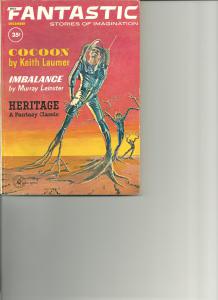
         I READ SOMETHING SURPRISINGin issue #32 of Illustration, a magazine about which I’ve long been curious but had never before picked up—probably due to its $15.00 an issue price tag. Anyhow for some reason, I finally broke down a sprang for a copy, and inside there was a short piece about Robert Adranga, who apparently did a lot of well-received covers for a Hitchcock YA mysteries series called The Three Investigators. I remembered Adranga’s name because he did a cover for Fantastic back in the sixties that I loved (I still have the issue, and the cover was also reproduced in the article.) It turns out that the Fantastic cover was Adranga’s first sale, made while he was yet in art school. The interviewer asked him about it, and it was Adranga’s answer which surprised me. Here’s what he said:

            “I took my portfolio to those two…

View original post 315 more words

Windy Con 37

6 Jul

kentmcdanielwrites's avatarkentmcdanielwrites

I wrote this con report for Bob Jennings’s outstanding SF fanzine Fadeaway back in January. With this year’s Windy Con looming on the horizon, seems like a logical candidate for my first post here.


MEANWHILE

BACK AT

THE CON


            Man, you gotta be really careful what you say around Bob Jennings.  He was gonna email me some info, and I said I might not get back to him till Monday, cause I was gonna be at WindyCon.  Next thing I knew, I was doing a WindyCon con report for Fadeaway.  Which meant I’d have to do more than swill beer in the con suite all weekend, I supposed.  Go to some actual events perhaps.

WindyCon 37 was held at the Westin in the Chicagosuburb of Lombard out in DupageCounty.  So Friday, November 12, I hit the expressways around two in the afternoon and rolled into the hotel parking lot…

View original post 3,746 more words

Waitin’ For The Bus/Jesus Just Left Chicago

6 Jul

kentmcdanielwrites's avatarkentmcdanielwrites

By the 1980’s Z Z Top’s new songs were almost novelty numbers. They still put down some pretty nice grooves and some hot licks, but most of their tunes were cutesy little ditties designed to work well with the goofy vidoes they were grinding out for MTV. If anybody looked down their nose at that, the band cried all the way to the bank, I guess. Back in the seventies, though, Z Z Top was playing playing some strange, serious electric blues. They wore cowboy hats and rhinestone getups and marketed their stuff as southern rock, but it was electric blues. And it was good. For my money, their best album from that time was Tres Hombres, and the best thing on the album was an original medley called “Waitin’ For the Bus/Jesus Just Left Chicago”, both songs funky and bluesy.

My brother, Doug, and I played that medley many a night ourselves…

View original post 386 more words