For some reason, I write few love songs, but “Your Love Set Me Free” is one. The best move I ever made was hooking up with Dorothy, my wife, and this one’s about her. You can click on the icon below to hear it. (It sounds way better through headphones) The lyrics are below, too.
Your Love Set Me Free
Chorus:
Your love set me Free. Your love set me free.
Up in the ozone, I was alone
Chorus
When you caught my eye, I felt my spirit fly
Chorus
You saw through my jive, made me be alive
Chorus
You made me a man and glad that I am
Chorus
Oh, my God, your lips, are worth all your trips
Chorus
Yeah, you knock me out. There’s not a shred of doubt.
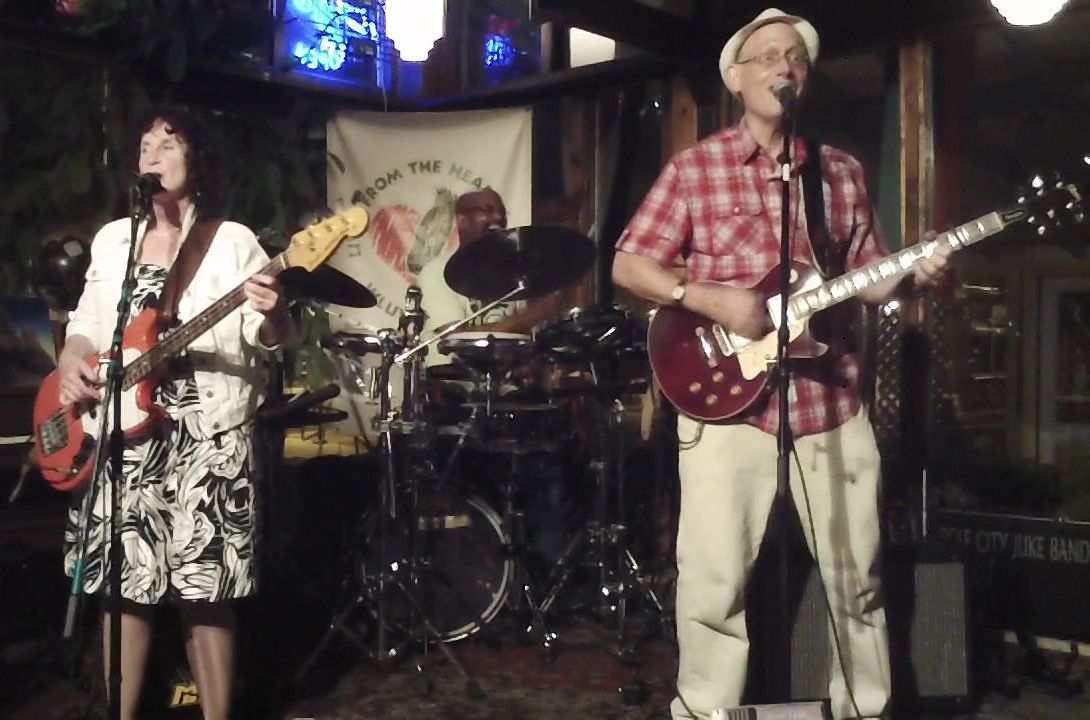
A couple Decembers back we were doing a show at The Heartland Cafe on Chicago’s North Side. Our friend Rudy Negrete stopped by with his Strat and sat in. Another friend, Josh Davis, happened to be down from Bloomington, with his his harps, and joined us, too. We played everything we all knew together, but didn’t want to stop. So we played “Kansas City”, which we were pretty sure we could fake. Turned out to be a nice end for the night.
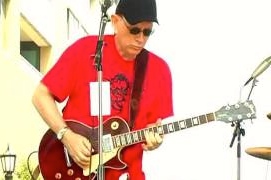
Josh pretty much stole the show on it, but Alpha was having a lot of fun on the drums, too. Dorothy and Rudy were both zeroed in on the groove like snipers on a target. I’m mostly off camera, but maybe you can tell I was having fun, too: that’s me throwing in the fills on the verses.
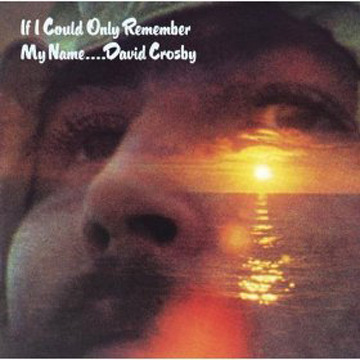
This week’s fave is “Orleans”, a traditional French song rendered by David Crosby on his 1971 album ”If I Could Only Remember My Name.” Although a veritable who’s who of Bay Area musicians (Jerry Garcia, Phil Lesh, Mickey Hart, Bill Kreutzman, Jack Casady, Paul Kantner, Grace Slick, Jorma Kaukonen, Joni Mitchell, Graham Nash, Neil Young, Gregg Rolie, Michael Shrieve and David Freiberg) appear on the record, I believe this track is all Crosby, overdubbing multiple (gorgeous) vocals.
I’ve wanted to know what this song is about for years, but thanks to the internet, I think it’s merely a listing of church or parish or maybe neighborhood names in Paris.
I always loved this record, from the day it came out. Critics were not kind at the time, but revisionist rock history now places it high amongst influential albums from the time. One thing that really interested me about the record was the way that the Bay Area musicians formed ad-hoc groups like this and performed on each other’s records, in much the same way that jazz musicians do. Many of the players on Crosby’s album also appear on the record ”Blows Against The Empire,” credited to Jefferson Starship but really a Paul Kantner solo project. There was always a great deal of movement between Crosby Stills Nash and Young, Jefferson Airplane, The Dead, Quicksilver Messenger Service and Santana, as well as singers like Joni Mitchell and Mama Cass Elliott.
I’ve read that some of this record reflects the pain the Crosby was suffering due to his girlfriend Christine Hinton’s tragic death in an auto accident; the song ”Traction In The Rain” is surely about that. Much of the record (and there’s an alternate version on YouTube that I just discovered) is filled with noodling and meandering jams, but the songs are strong, because Crosby always had a gift for melody. And for good or for ill, he always wrote lyrics with his heart on his sleeve; a lot of his lyrics may be, as Neil Young once said, hippie dreams, but he believed fully in them (even though he was a gun-totin’ coke head).
This post is reprinted from News From The Trenches, a weekly newsletter of commentary from the viewpoint of a working musician published by Chicago bassist Steve Hashimoto. If you’d like to start receiving it, just let him know by emailing him at steven.hashimoto@sbcglobal.net.
Posting “Big Jim” here, a song we just recorded. It’s blues. To give it a listen, click on the link below this paragraph. The lyrics are under the recording, and there’s a paragraph below them about how I happened to write the song.
BIG JIM
FOLKS CALL HIM BIG JIM
HE’S GOOD TO ROCK ALL NIGHT
FOLKS CALL HIM BIG JIM
LORD, HE WAS BORN TO ROCK ALL NIGHT
ALL HE’S GOT IS THEM THERE BAD BLUES
HE SINGS ‘EM WITH ALL HIS MIGHT
HE GREW UP ON THE SOUTH SIDE
IT WAS TOO COLD TO HIM ROUND THERE
THE SOUTH SIDE OF CHICAGO
IT WAS TOO COLD TO HIM ROUND THERE
NOW HE LIVES IN JACKSON COUNTY
IT’S HIS HOME, HE DOES DECLARE
THEY GAVE JIM A GUN
AND SENT HIM OFF TO FIGHT
SENT HIM OFF TO NAM
TO BE PART OF THAT THERE FIGHT
THINGS THAT HE SAW THERE
STILL COME BACK TO HIM IN THE NIGHT
THE BLUES AND JACK DANIELS
ARE MUCH OK BY HIM
SINGIN’ THE BLUES AND OLE JACK DANIELS
ARE MUCH OK BY HIM
WHEN THE BAND’S IN THE ZONE
HE’S ALL DOWN WITH THE JAM
REPEAT FIRST VERSE
This New Years Eve my wife Dorothy and I went down to Cumberland State Park in Eastern Kentucky by the Tennessee border. They have a New Years Eve dance there every year and it’s a good one. New Years Day, we were riding back on Highway 61, which winds through miles and miles of farmland, woods, and little towns, and the lyrics to “Big Jim” came to me. We decided to stop in Indianapolis and spend the night; I wrote the lyrics down on some paper that was in our hotel room. When we got back to Chicago, I tossed the lyrics on my desk. Around March I decided to put them to music, and we recorded it this July. Don’t know why I move ahead on projects at the speed of glacier, I just do.
I’d like to dedicate this one to Tawl Pawl, Billy Desmond, and Big Larry. Long may they rock. And to the memory of my brother Doug and the memory of Big Twist.
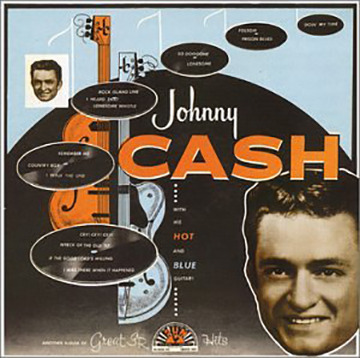
This week’s fave is some old-school country music, from back before country music became rock with cowboy hats. It’s the Johnny Cash classic ”Folsom Prison Blues.”This is the original version, from Cash’s 1957 debut album ”Johnny Cash With His Hot And Blue Guitar”; a “live” version, actually recorded at Folsom,
is also accepted as an iconic and official version. The backstory there is that the cheers of the prisoners reacting to the line “But I shot a man in Reno just to watch him die” was added in post-production; the prisoners were careful not to cheer any lines referring to lawlessness lest they invite retaliation from the guards, who were probably a little nervous about the show anyway.
I assume that the players on the session are Cash’s long-standing band (they also played on the live version), guitarist Luther Perkins, bassist Marshall Grant and drummer W.S. Holland. The record was the first LP issued by Sun Records; the legendary Sam Phillips produced, and I assume it was recorded at the Sun Studios in Memphis, Tennessee.
Cash wrote the song while stationed with the U.S. Air Force in West Germany, in the 1950’s. He had seen a movie ”Inside The Walls Of Folsom Prison” (a dramatic film, not a documentary; he came up with “I shot a man in Reno” line and “borrowed” a melody and some of the lyrics from a song by Gordon Jenkins, “Crescent City Blues,” which in turn was based on a song by blues singer/pianist Little Brother Montgomery. The Jenkins song was on a “concept album” called ”Seven Dreams,” which was released in 1953. Jenkins is the author of one of the most beautiful jazz ballads, ”Goodbye,” which was Benny Goodman’s sign-off tune for his radio show, and also arranged Frank Sinatra’s “September Of My Years” album. The singer on Jenkins’ “Crescent City Blues” was Beverly Mahr. Jenkins sued Cash in the 70’s and was paid a settlement of $75,000; it’s unclear if Montgomery was ever paid any money (Montgomery spent a lot of time here in Chicago and I wonder if any of you mugs out there knows anything about this?).
The song became one of Cash’s signature tunes, and helped forge his image as an outlaw, although, unlike Merle Haggard, he was never in prison. He did spend a lot of his early years living a wild life on the margins of the law, along with room-mate Waylon Jennings. He was a notorious drug user, but finally cleaned himself up in the 1990’s.
Cash was an activist; he continued to do prison concerts throughout his career, and was an early fighter for Native American rights – he recorded the song ”The Ballad Of Ira Hayes” in 1964. Hayes was one of the U.S. Marines who raised the American flag on Mt. Suribachi on Iwo Jima; he was a member of the Pima tribe, and on his return to the United States he descended into alcoholism and died of exposure in 1955. The Clint Eastwood film ”Flags Of Our Fathers” is a moving account of his story. Cash also shook up country music circles when he recorded ”Girl From The North Country” with Bob Dylan in 1969 (it became the leadoff track on Dylan’s album ”Nashville Skyline,” which also shook up the rock world), and his invitation to Dylan to appear on his television show arguably opened the gates to all subsequent country/rock/folk collaborations.
Cash died in 2003, after experiencing a career rejuvenation at the hands of producer Rick Rubin.
This post is reprinted from News From The Trenches, a weekly newsletter of commentary from the viewpoint of a working musician published by Chicago bassist Steve Hashimoto. If you’d like to start receiving it, just let him know by emailing him at steven.hashimoto@sbcglobal.net.
I’m posting an audio recording we made some time ago of “Stagger Lee”, one of my favorite tunes. We thought the recording had been lost a few years back in a computer crash, but Robert Marshall at The Cave Recording, where we recorded it, found a copy last month in their system’s memory . A great surprise, and we’re going to include the song on a new album were working on. If you’d like to hear the recording, just click on the icon below:
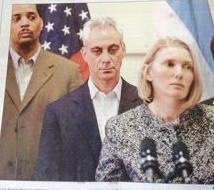
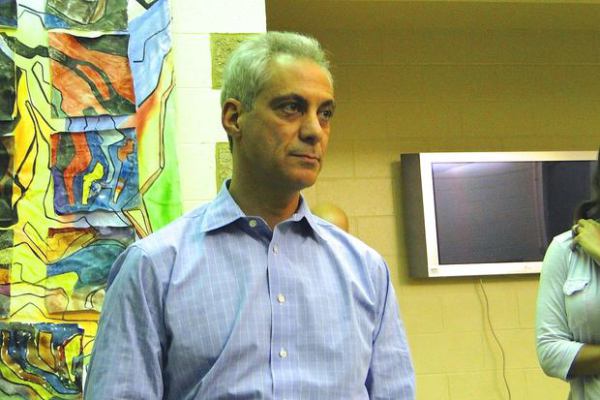
I coupled the song “Don’t need No More Rahm” with a slide show, and I’m posting it below. When the video’s running, if you click on the share arrow in the upper left hand corner, you can download the video.
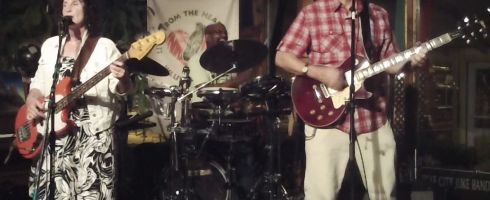
The video below is Alpha Stewart, my wife Dorothy, and me playing “Stagger Lee” (and enjoying it big time) at The Heartland Cafe, a couple blocks from the lake on Chicago’s north side. I’ve loved the tune since I first heard Lloyd Price’s version way back when. What we’re playing owes something to his version and something to Taj Majal’s, and a lot of it’s our own take on the tune. (The video’s downloadable, too; click the “share” arrow that appears in the top left corner as the video plays.)






 Dumbfounding Stories