Yard Work

14 Oct

Yasrd work illo1           “Yard Work,” a short story I wrote about an angry retired firefighter just appeared on Black Denim Lit, where it’s streaming. Here’s how it starts:
Bob Quigly stood looking out his bay window wondering when the neighborhood started to suck. When Janet, the kids, and he moved in, it was all cops, firefighters, and teachers. Who had to live in the city for their jobs. Things were suburban as Chicago got. But that was twenty-two years ago and for a while now, whenever somebody moved out, somebody worse moved in.

            Like that fat slob across the street in her lawn chair. Why did she always sit there?

The people over there before never pulled that shit. They stayed inside or sat out back like normal people. Then that weirdo had to move in, who sat there every afternoon; usually came back in the evening, too. He felt like she was staring into his living room. Because she was.

            Or the house to her left. Russian immigrants moved in about a year ago, owned three cars between them. Why they needed the third one, a rusted out Toyota, he never knew, but they liked to park it in front of his house. Left it there a week sometimes. Once, they left it there two weeks. Finally Bob made a late night trip to McDonalds for a chocolate shake. He flung it along the car’s street side. They might take a hint, he figured. But no, the car sat there another week. OK, milkshakes didn’t do it, so he started thinking he should slash their tires…

If you’d like to read the whole thing, just click the link below.

http://www.bdlit.com/yard-work.html

Hash’s Faves (“California Sun”)

26 Sep


the_rivieras-california_sunThis week’s pick is total guilty-pleasure, end-of-summer stuff; I’ve always stressed that this ain’t music criticism but stuff that I love, for whatever inane reasons. It’s the 1964 teen classic ”California Sun” by The Rivieras.

The Rivieras were a band from South Bend, Indiana; totally ironic that their big hit was one of the defining songs of the frat rock/surf/hot rod movement. The band members at the time (as far as I can tell) were Marty “Bo” Fortson, vocals and rhythm guitar, Joe Pennell, lead guitar (remember when you had a “rhythm” guitarist and a “lead” guitarist?), Otto Nuss, organ and piano, Doug Gean, bass, and Paul Denner, drums. The song was written by Henry Glover, a prolific African-American songwriter whose other big hit was ”The Peppermint Twist.” It’s probable that none of the original band members had ever seen a wave or surfed in their lives, but Hot Rods and Hot Rod culture were a thing in Indiana, so I guess they have a certain amount of street cred. And they probably contributed greatly to the sales of Farfisa organs.

In 1964, even though I was still 7 years away from being able to drive, I was a total Hot Rod nut. I built model cars (anyone out there remember Bud “Kat” Anderson?), drew ”Rat Fink” sweatshirts for the local juvenile delinquents, went to the occasional drag race at U.S. 30, and read all of the car magazines. I believe among the first 45’s I ever bought were the Beach Boys’ “Get Around,” Jan & Dean’s “Little Old Lady From Pasadena,” and this.

You can listen to it here:

This post is reprinted from News From The Trenches, a weekly newsletter of commentary from the viewpoint of a working musician published by Chicago bassist Steve Hashimoto. If you’d like to start receiving it, just let him know by emailing him at steven.hashimoto@sbcglobal.net.

“Don’t Take Your smell To Town”

9 Sep
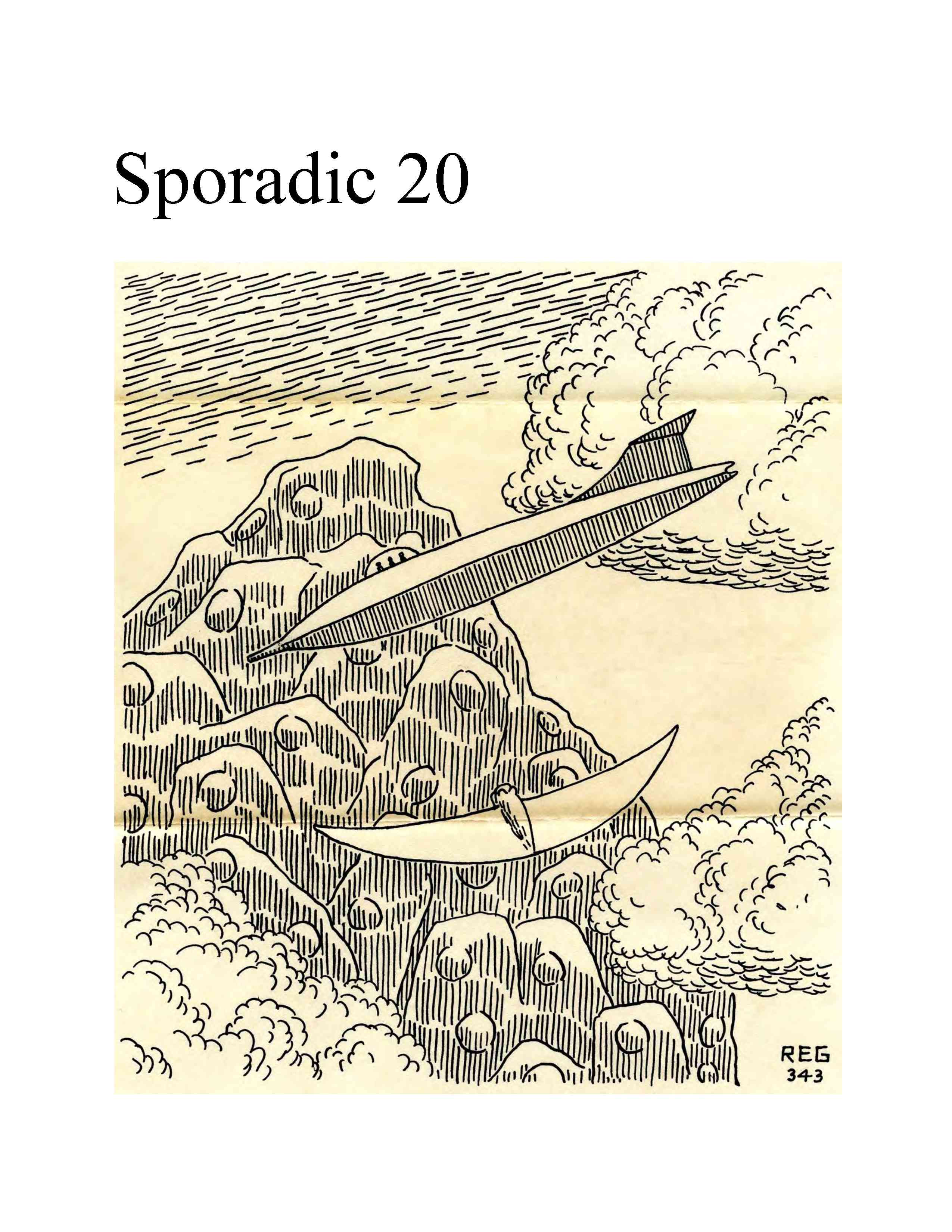
cover by Robert E. Gilbert

cover by Robert E. Gilbert

I’m embedding some audio and lyrics in this post, but first some background:

In 1958 Johnny Cash’s “Don’t Take Your Guns To Town” was #1 on the country charts for six weeks. It’s a lugubrious little ditty about a young cowboy who decides to go to town, ignores his mom’s advice to leave his guns at home, and ends up getting gunned down. (This was back when a country act could release an anti-handgun song without kissing his or her career bye-bye.) Around 1962 Howard Shockley, a teenage science-fiction fan from Opelika, Alabama, wrote “Don’t Take Your Smell To Town,”a parody to be sung to the same melody as Cash’s song. In SF fandom such tunes are called filk songs, and I think Shockley’s was a gem. It concerned a young sanitation worker who lived in the city dump and ignored the advice of the song’s title.

The protagonists of both songs were named Billy Joe, and Shockley presented his composition to his buddy at Opelika High, Bill Plott, who himself went by Billy Joe. Plott was fellow SF fan, and quicker than you could say “Great Ghu!”, published Shockley’s filk song in his fanzine, Maelstrom. Plott, for reasons too numerous and largely unspeakable to mention, is actually now somewhat of a legend in SF fandom, but around 1968 he left that subculture for what was to prove many decades. He got drawn back into the fold only in 2012 when he was invited as Guest of Honor at Deep South Con 50. That happy trip inspired him to revive another of his fanzines from long ago, Sporadic, and he has published it bimonthly since. By coincidence, around the same time, Plott reconnected with his old pal Howard Shockley, now a Presbyterian minister in South Carolina. In Sporadic #20 Plott reprinted “Don’t Take Your Smell To Town” much to his old friend’s dismay surprise.

I like to think–imagine, say some–that I can play guitar and sing, and when I saw the lyrics in Sporadic, thought, “Gee, I should record that.” Like most thoughts requiring effort from me if acted on, it was promptly forgotten. Then a few weeks ago, out of the blue, I found myself going into The GarageBand app on my Mac and recording “Don’t Take Your Smell To Town.” Personally, I think The Devil made me do it.

If you want–and how could you not?- you can click on the hypertext below to hear the result. For the record (no pun intended) I’m playing everything on the song except the snare drum. That, I talked my wife Dorothy into playing. Howard Shockley’s lyrics are below the recording.

Don’t_Take_Your_Smell_To_Town_080715

DON’T TAKE YOUR SMELL TO TOWN

By Howard Shockley

A D.S.* boy named Billy Joe grew restless in the Dumps.

He looked across the sea of trash while sitting on a stump.

He said, “I think I’ll leave today to see the whole world ‘round.”

But then he heard his partner say, “Don’t take your smell to town, boy.

You’d better stay at home, Bill.

Don’t take your smell to town.”

Bill just smiled and said to him, “Your boy’s become a man.

“I’ll take a bath, use Listerine, and roll myself in Ban.

“This Air-Wick, too, will help a lot to keep the odor down.”

But again he heard his partner say,

“Don’t take your smell to town, boy;

They’ll run you out of town, Bill.

Don’t take your smell to town.”

Bill jumped in the garbage truck and gave the switch a turn,

The wheels dug in the greasy muck and caused the stuff to churn;

As he drove along the trail, he said “At last, I’m City bound!”

But then echoed the words again, “Don’t take your smell to town, boy;

You’d better stay at home, Bill;

Don’t take your smell to town.”

Bill rode in the little town, a smile across his face;

And of that smell that used to be there wasn’t any trace.

But later on that afternoon, the folks began to frown;

Again he heard the warning words,

“Don’t take your smell to town, boy;

“Leave it here at home, Bill,

Don’t take your smell to town.”

Bill walked in a small saloon to get himself a drink;

A cowpoke cried aloud to all, “Say, what the hell’s that stink?”

Bill put down his drink and saw that no one was around.

Again, he heard the fateful words,

“Don’t take your smell to town, boy;

You’d better stay at home, Bill.’

Don’t take your smell to town.”

Walking to his faithful truck, young Bill began to frown;

He’d left the Dumps to see the World, and it had put him down.

Riding off, he looked around and wondered with a sigh,

Who’d wrote the posters with the words:

“Take your smell from town, boy;

Don’t leave it here with us.

And please don’t take the bus!”

Toward the setting sun he rode, not ever looking back;

Nothing of the job he held could anything detract.

He’s there today, out in the Dumps, his Destiny fulfilled.

His watchword is that sound advice:

“Don’t take your smell to town boy;

You’d better stay at home, Bill.

Don’t take your smell to town.”

** DEPARTMENT OF SANITATION

The tune’s more fun if you’re familiar with Cash’s original, and you can hear that and read the lyrics at: https://www.youtube.com/watch?v=A74Wq0B1WrI.

Hash’s Faves: “Kid Charlemagne”

7 Sep

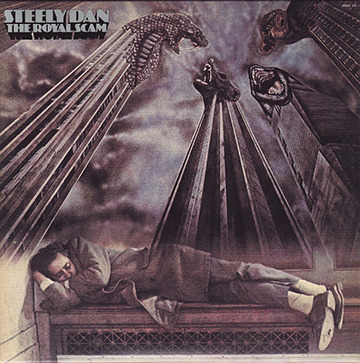
The_Royal_ScamThis week’s pick is by the band Steely Dan, “Kid Charlemagne,” from their 1976 album ”The Royal Scam.” It was written by Walter Becker and Donald Fagen and features Becker on guitar, Fagen on lead vocals, and the L.A. A-list session crew of Larry Carlton on guitar, Don Grolnick and Paul Griffin on keyboards, Chuck Rainey on bass, Bernard “Pretty” Purdie on drums, and Michael McDonald, Clydie King, Sherlie Matthews and Vanetta Fields on backing vocals.

This song pretty much has everything I look for and love about the best Dan tunes – interesting chord changes, an opaque story line delivered in Fagen’s world-weary voice, obscure cultural references, and of course stellar playing, arranging, production and recording. One story online has it that Fagen originally wanted Lee Ritenour for the session but he wasn’t available; when Carlton was hired Fagen asked him to play the solo in Ritenour’s style (you can take this with a grain of salt).

Both Fagen and Becker have said that the broad inspiration for the song was legendary LSD chemist Owsley Stanley, although Owsley has scoffed at the idea. I find it credible, although the lyrics can also be fit to a storyline about anything from rock cocaine to meth. The “Technicolor motorhome” certainly refers to Ken Kesey and The Merry Pranksters’ day-glo bus Furthur, and an online commenter has also said that the “Is there gas in the car” line refers to an incident where Stanley got busted because he ran out gas. Whatever the case, I’ve always loved the mystery in this quintessential L.A.-in-the-70’s lyric.

As a sidebar, no one who is on speaking terms with me can corroborate this (meaning my girlfriend from the time), but back in the early 90’s I had the brilliant idea to start a Steely Dan tribute band. We were playing a lot of Dan tunes on the legendary Famous Pizza Gig (Monday nights at Bacino’s on East Wacker Drive), and we had some good charts. My idea was to use guitarist Steve Hutchins on vocals (and guitar of course), Neal Alger or John Lewis on guitar, Carter Luke on keys, Heath Chappell on drums and Mike Levin on saxes. I never quite got around to organizing it, of course, and now the landscape is dotted with Dan bands. Just sayin’…

You can listen to it here: https://www.youtube.com/watch?v=uGr6knsm8t0

This post is reprinted from News From The Trenches, a weekly newsletter of commentary from the viewpoint of a working musician published by Chicago bassist Steve Hashimoto. If you’d like to start receiving it, just let him know by emailing him at steven.hashimoto@sbcglobal.net.

Hash’s Faves: “Sandu”

31 Aug

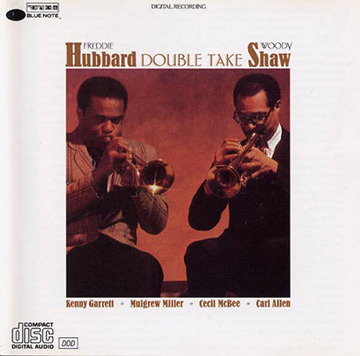
Double_TakeThis week’s pick is one of my favorite jazz blues tunes, ”Sandu,” written by the majestic trumpeter Clifford Brown, and in this case recorded by the awe-inspiring duo of Woody Shaw and Freddie Hubbard. It’s from their 1985 duo album ”Double Take,”and features Shaw and Hubbard on trumpets, Kenny Garrett on alto sax, Mulgrew Miller on piano, Cecil McBee on bass and Carl Allen on drums.

Shaw takes the first solo, and after the 16th-note line he rips in his third chorus I can just picture him taking the horn off of his face and grinning at Freddie, like “How ‘bout that?” Freddie, of course, rises to the challenge, but I think I still dig Woody’s solo better.

It’s interesting to note that Miller was only 30 years old at the time of this recording, Garrett was only 25 and Allen was 26. McBee was the senior sideman, at 50. He’s one of my favorite bassists, and as we were watching a DVD of Blue Note records’ anniversary concerts in New York, McBee was featured with, I think, Roy Hutcherson, and Nancy said “He reminds me of you.” Quite a compliment, which I take with a grain of salt, but he’s definitely one of the cats I model my playing on. Longtime readers may recall that although I’m strictly an electric bass guitarist, unlike most bassists my age my first gigs on the instrument were bebop gigs, rather than the path usually taken by pork-chop players (whose first gisg were usually rock or blues or r and b gigs). The bassists I listened to as I was learning how to play were Cecil, Ray Brown, Ron Carter, Paul Chambers, Percy Heath, Mingus, Keter Betts, Jim Hughart, Stanley Clarke, Nils Henning Orsted-Pederson and Dave Holland (would that I had absorbed more than I did!).

Sad to think that within 4 years Shaw would die. Freddie died in 2008, after a celebrated career that spanned post-bop, free jazz and fusion, and I’m glad that I had a chance to at least meet him, if not play with him. I first became aware of Shaw when he released his ”Rosewood” album in 1978, when I was still a new jazz listener. I loved his playing, being an ex-trumpeter, but his harmonic sophistication was probably beyond me at the time (probably still is). Tragically, he was only 45 when he died, and hadn’t achieved the fame he deserved, although he was considered a trumpet player’s trumpet player.

You can listen to it here: https://www.youtube.com/watch?v=hm4_4tPbXxA

This post is reprinted from News From The Trenches, a weekly newsletter of commentary from the viewpoint of a working musician published by Chicago bassist Steve Hashimoto. If you’d like to start receiving it, just let him know by emailing him at steven.hashimoto@sbcglobal.net.

Hash’s Faves: “Mexico”

27 Aug

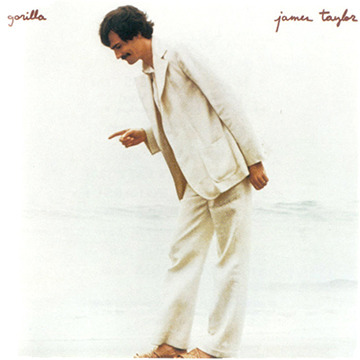
GorillaThis week’s pick is an old tune by singer/songwriter James Taylor, “Mexico.” It’s from his 1975 album Gorilla and features Taylor on guitar and vocals, Milt Holland on percussion (I assume he plays the marimba part, although multi-instrumentalist Victor Feldman, who appears elsewhere, seems the more likely culprit), Gayle Levant on harp, David Crosby and Graham Nash on harmony vocals and the famed L.A. rhythm section team known as The Sectio, Danny “Kootch” Kortchmar on guitar, Leland Sklar on bass and Russ Kunkel on drums and shaker.

Taylor is an extremely thoughtful musician, not only as a lyricist but as a bandleader as well. His guitar-playing style is not the simple strumming-chords school of rhythm guitar, a la Bob Dylan (I know, I know, Dylan does occasionally use an Elizabeth Cotten style of finger-picking, but mostly he strums), but rather a carefully thought-out part of the arrangement of each song, as a whole, often interacting closely with the bass parts that Leland Sklar played. Sklar, for his part, is an extremely melodic player; his parts very rarely stick to simple roots and fifths, and he is one of my favorite players. (Jimmy Johnson, from the fusion band Flim and The BBS, took the bass chair over from Sklar, who held it for many years).

Taylor still suffers from the perception that all of his songs are serious and that he’s a humorless New Englander, but I think that nothing could be farther from the truth. Although I’ve never seen him live myself, I’ve watched many of his concert videos, and he seems to be a warm kind of guy with a dry sense of humor. This tune is very light-hearted and the arrangement is buoyant. Having Nash on harmonies helps add to the joyous atmosphere, I’d say.

Kootch had been with Taylor from the beginning of his career. After spending some time in England he relocated to California, where he became a session player for Carole King, touring with her as well. His work on King’s Tapestry album and his work with Taylor led to his becoming one of the first-call players in L.A., and he formed The Section with Sklar, Kunkel and keyboard player Craig Doerge. Their sound kind of defined L.A. pop music in the late 70’s and 80’s.

You can listen to it here: https://www.youtube.com/watch?v=PgkKjHN349I

This post is reprinted from News From The Trenches, a weekly newsletter of commentary from the viewpoint of a working musician published by Chicago bassist Steve Hashimoto. If you’d like to start receiving it, just let him know by emailing him at steven.hashimoto@sbcglobal.net.

Hash’s Faves: “I Feel Fine”

20 Aug


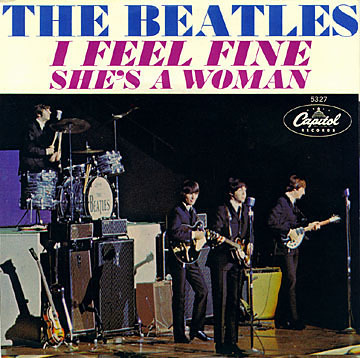
TI_Feel_Finehis week’s pick is a perfect little gem of a pop song by The Beatles: “I Feel Fine,” written by Lennon and McCartney. This was the A-side of their 1964 single, backed with ”She’s A Woman” (it was later included on their album ”Beatles ’65”; in those days albums were often just a collection of singles and filler). It’s just the Boys — John Lennon on guitar and vocals; Paul McCartney on bass and vocals; George Harrison on guitar and vocals; and Ringo Starr on drums.

This record is evidently the first recording to purposely feature feedback; the story is that John had leaned his semi-acoustic guitar up against an amp in the studio which, naturally, resulted in howling feedback. The Boys were just starting to feel their oats as studio auteurs and immediately asked producer George Martin if that sound could be incorporated into the song. Ringo has also said that his drum rhythm was based on the Latin-ish groove of Ray Charles’ “What’d I Say.” Although harmonically it’s a pretty simple tune, they do some deceptive things. And I love the vocal parts (I tend to like the songs where John sings lead simply because he’s so human; singing along in the car with Paul can be daunting).

You can listen to it here: https://www.youtube.com/watch?v=TE5hoaij79U

This post is reprinted from News From The Trenches, a weekly newsletter of commentary from the viewpoint of a working musician published by Chicago bassist Steve Hashimoto. If you’d like to start receiving it, just let him know by emailing him at steven.hashimoto@sbcglobal.net.

Your Love Set Me Free

15 Aug
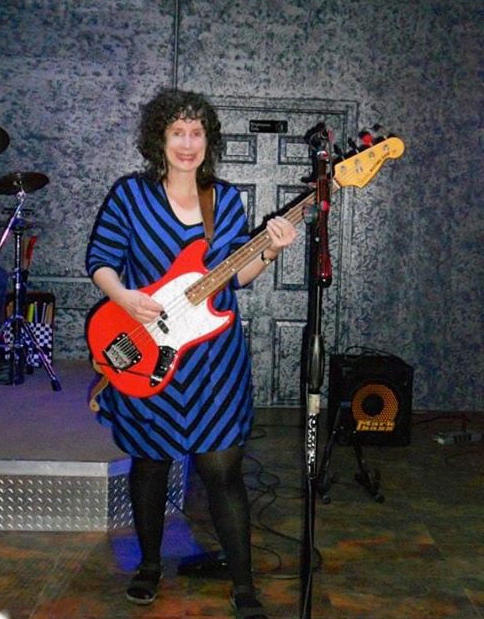
Dorothy at a show last spring.

Dorothy at a show last spring.

For some reason, I write few love songs, but “Your Love Set Me Free” is one. The best move I ever made was hooking up with Dorothy, my wife, and this one’s about her. You can click on the icon below to hear it. (It sounds way better through headphones) The lyrics are below, too.


Your Love Set Me Free

Chorus:

Your love set me Free. Your love set me free.

Up in the ozone, I was alone

Chorus

When you caught my eye, I felt my spirit fly

Chorus

You saw through my jive, made me be alive

Chorus

You made me a man and glad that I am

Chorus

Oh, my God, your lips, are worth all your trips

Chorus

Yeah, you knock me out. There’s not a shred of doubt.

Chorus

We  been together, always and forever

Chorus

You’re rain drifting down on a meadow,

and by now I think you know

Chorus


End of the Night Jam at The Heartland Cafe

4 Aug

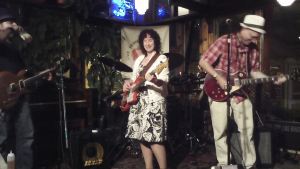
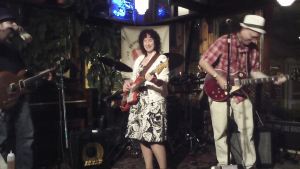
logoA couple Decembers back we were doing a show at The Heartland Cafe on Chicago’s North Side. Our friend Rudy Negrete stopped by with his Strat and sat in. Another friend, Josh Davis, happened to be down from Bloomington, with his his harps, and joined us, too. We played everything we all knew together, but didn’t want to stop. So we played “Kansas City”, which we were pretty sure we could fake. Turned out to be a nice end for the night.

Josh pretty much stole the show on it, but Alpha was having a lot of fun on the drums, too. Dorothy and Rudy were both zeroed in on the groove like snipers on a target. I’m mostly off camera, but maybe you can tell I was having fun, too: that’s me throwing in the fills on the verses.

stormy xxiv !

Another night at The Heartland

Hash’s Faves (“Orleans” by David Crosby)

28 Jul

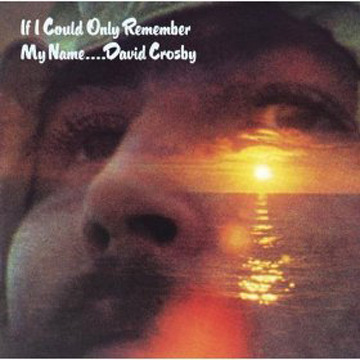
If_I_Could_Only_RememberThis week’s fave is “Orleans”, a traditional French song rendered by David Crosby on his 1971 album ”If I Could Only Remember My Name.” Although a veritable who’s who of Bay Area musicians (Jerry Garcia, Phil Lesh, Mickey Hart, Bill Kreutzman, Jack Casady, Paul Kantner, Grace Slick, Jorma Kaukonen, Joni Mitchell, Graham Nash, Neil Young, Gregg Rolie, Michael Shrieve and David Freiberg) appear on the record, I believe this track is all Crosby, overdubbing multiple (gorgeous) vocals.

I’ve wanted to know what this song is about for years, but thanks to the internet, I think it’s merely a listing of church or parish or maybe neighborhood names in Paris.

I always loved this record, from the day it came out. Critics were not kind at the time, but revisionist rock history now places it high amongst influential albums from the time. One thing that really interested me about the record was the way that the Bay Area musicians formed ad-hoc groups like this and performed on each other’s records, in much the same way that jazz musicians do. Many of the players on Crosby’s album also appear on the record ”Blows Against The Empire,” credited to Jefferson Starship but really a Paul Kantner solo project. There was always a great deal of movement between Crosby Stills Nash and Young, Jefferson Airplane, The Dead, Quicksilver Messenger Service and Santana, as well as singers like Joni Mitchell and Mama Cass Elliott.

I’ve read that some of this record reflects the pain the Crosby was suffering due to his girlfriend Christine Hinton’s tragic death in an auto accident; the song ”Traction In The Rain” is surely about that. Much of the record (and there’s an alternate version on YouTube that I just discovered) is filled with noodling and meandering jams, but the songs are strong, because Crosby always had a gift for melody. And for good or for ill, he always wrote lyrics with his heart on his sleeve; a lot of his lyrics may be, as Neil Young once said, hippie dreams, but he believed fully in them (even though he was a gun-totin’ coke head).

You can listen to it here: https://www.youtube.com/watch?v=Mk8PSTtOsKk

This post is reprinted from News From The Trenches, a weekly newsletter of commentary from the viewpoint of a working musician published by Chicago bassist Steve Hashimoto. If you’d like to start receiving it, just let him know by emailing him at steven.hashimoto@sbcglobal.net.